Plagiarism in IELTS.
Plagiarism in IELTS writing tasks can invalidate your band score or entire test results, as examiners detect copied content through unoriginal phrasing or memorized templates. This issue arises mainly in Task 1 (reports/graphs) and Task 2 (essays), where candidates reuse online samples instead of generating authentic responses.
Why Plagiarism Occurs in IELTS
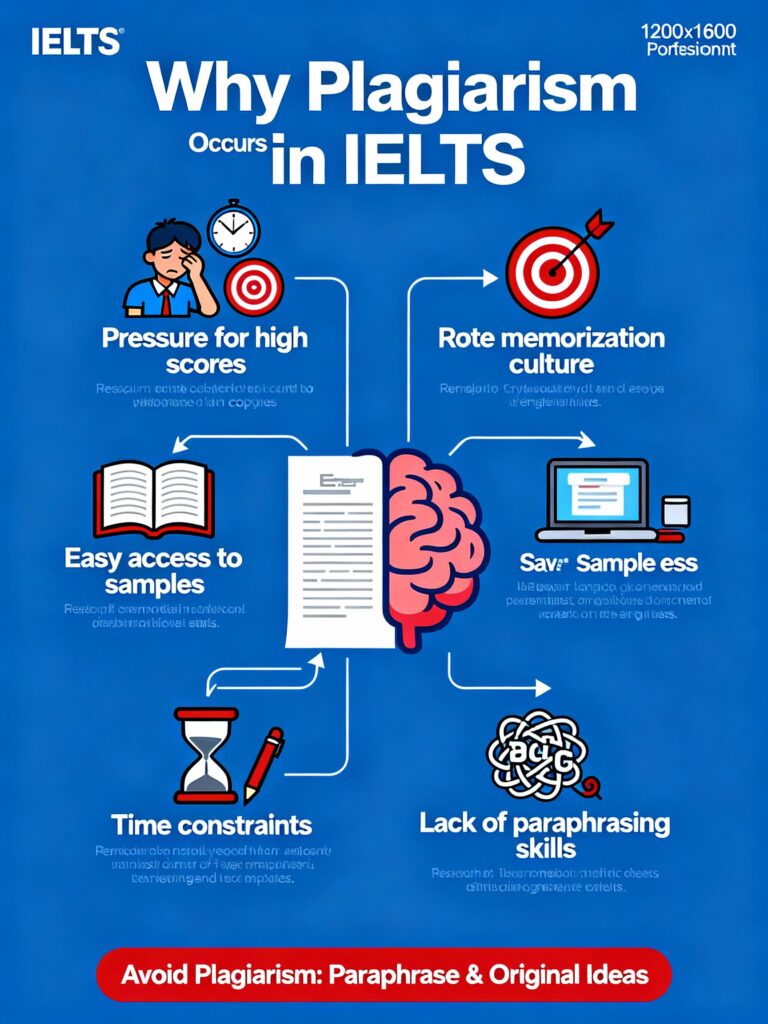
Many test-takers memorize high-scoring essays from prep sites or YouTube, hoping to boost Task 2 scores (worth 66% of writing marks). Common pitfalls include identical introductions like “In recent years, there has been a growing concern about…” or overused structures without personalization. Examiners flag these during manual marking, as IELTS prioritizes original ideas over perfection. Automated checks also scan for overlaps with common sources, leading to zero scores on affected tasks.
Detection and Consequences
IELTS doesn’t use AI plagiarism detectors like universities but relies on experienced examiners comparing responses to known templates. Signs include unnatural vocabulary clusters or generic examples lacking context. Penalties range from band 0 on the task (drastically lowering overall writing score) to full test cancellation without refund—especially if proxy writing or external aid is suspected. Repeat offenders face bans from British Council/IDP centers, jeopardizing study abroad dreams.
How to Avoid Plagiarism Effectively
-
Paraphrase Task Prompts: Rewrite the question in your own words; e.g., change “The chart shows population growth” to “The diagram illustrates rising numbers in residents.”
-
Use Personal Examples: Replace stock stories with real-life anecdotes, like “In my hometown Delhi…” instead of vague “In a developing country.”
-
Practice Originality: Time yourself on 20+ past papers without notes; aim for varied sentence structures and topic-specific vocab.
-
Build Vocabulary Naturally: Learn synonyms (e.g., “increase” as “surge/escalate”) through reading, not rote lists.
Prevention Strategies for High Scorers
Target 7+ bands by focusing on Task Response (clear position) and Lexical Resource (precise words). Tools like Grammarly help pre-test but never during—practice handwriting essays offline. Join mock tests at WayToCrackIELTS.com for feedback on authenticity. Remember, genuine errors score better than perfect copies; examiners reward development over imitation.
Long-Term Preparation Tips
IELTS validity lasts 2 years, so invest in ethical prep: read The Hindu/Guardian for ideas, record speaking for self-review, and analyze band 9 samples only for structure. Post-exam, check results via TRF; disputes rarely reverse plagiarism flags. By prioritizing originality, secure reliable scores for visas/universities without risks.
Key Causes
Cultural and educational backgrounds play a significant role, as some students come from systems where rote memorization and copying established texts is encouraged, blurring the line between learning and plagiarism. Lack of awareness about intellectual property rights, combined with easy internet access to sample essays, exacerbates this issue, making direct copying seem like a shortcut. Poor time management or fear of failure also pushes candidates to lift phrases without proper paraphrasing.
IELTS-Specific Triggers
In the exam, strict time limits for Task 1 and Task 2 force rushed writing, where candidates paste pre-learned templates rather than adapting ideas to the prompt. High-stakes competition for study abroad or immigration amplifies desperation, especially among non-native speakers struggling with vocabulary and structure.
Prevention Tips
Educators recommend practicing original paraphrasing and using plagiarism checkers during preparation to build authentic skills. IELTS examiners detect off-topic or overly generic memorized content through inconsistency checks, so focusing on prompt-specific ideas ensures higher scores.
For your post “Why Plagiarism Occurs in IELTS,” here’s a high-quality header image concept: A split-scene illustration showing a stressed student at a desk copying from a glowing laptop screen (left side, dark tones with red “COPY” warnings), transitioning to a confident writer crafting unique text on paper (right side, bright blues with green checkmarks for originality). Bold white text overlay reads “Why Plagiarism Happens in IELTS” in modern sans-serif font, with subtle IELTS logo and brain/lock icons for education and integrity. Ideal dimensions: 1200x628px for social media sharing.