
UPDATED TOEFL iBT TEST STRUCTURE – JANUARY 2026
The TOEFL iBT test introduces transformative updates effective January 21, 2026, reshaping its structure to enhance efficiency, adaptability, and relevance for modern academic English proficiency assessment. These changes, announced by ETS, shorten the overall test duration while incorporating adaptive technology and contemporary content themes. Tests taken before January 20, 2026, follow the existing format, allowing test-takers flexibility in scheduling.
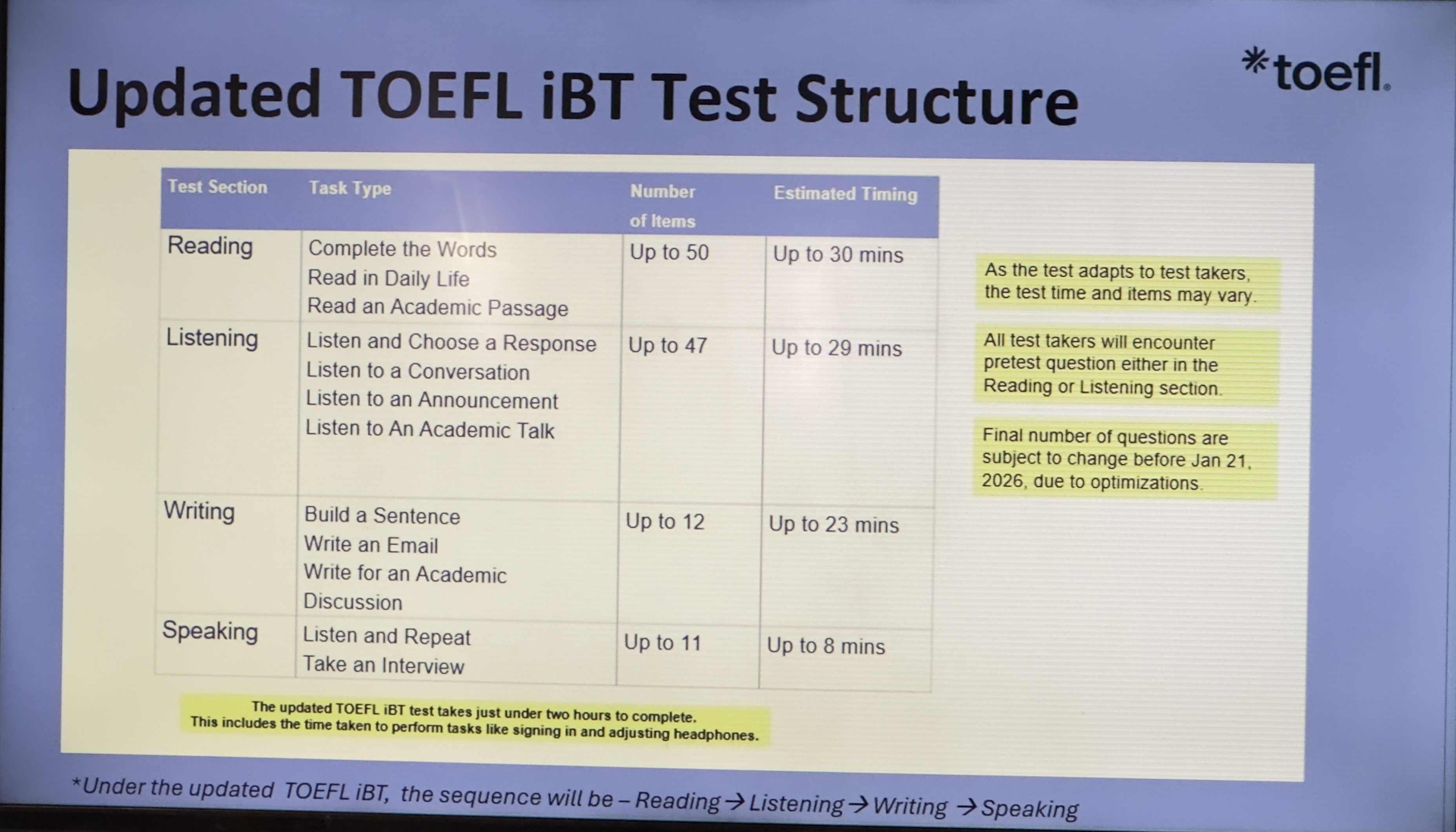
Adaptive Section Overhauls
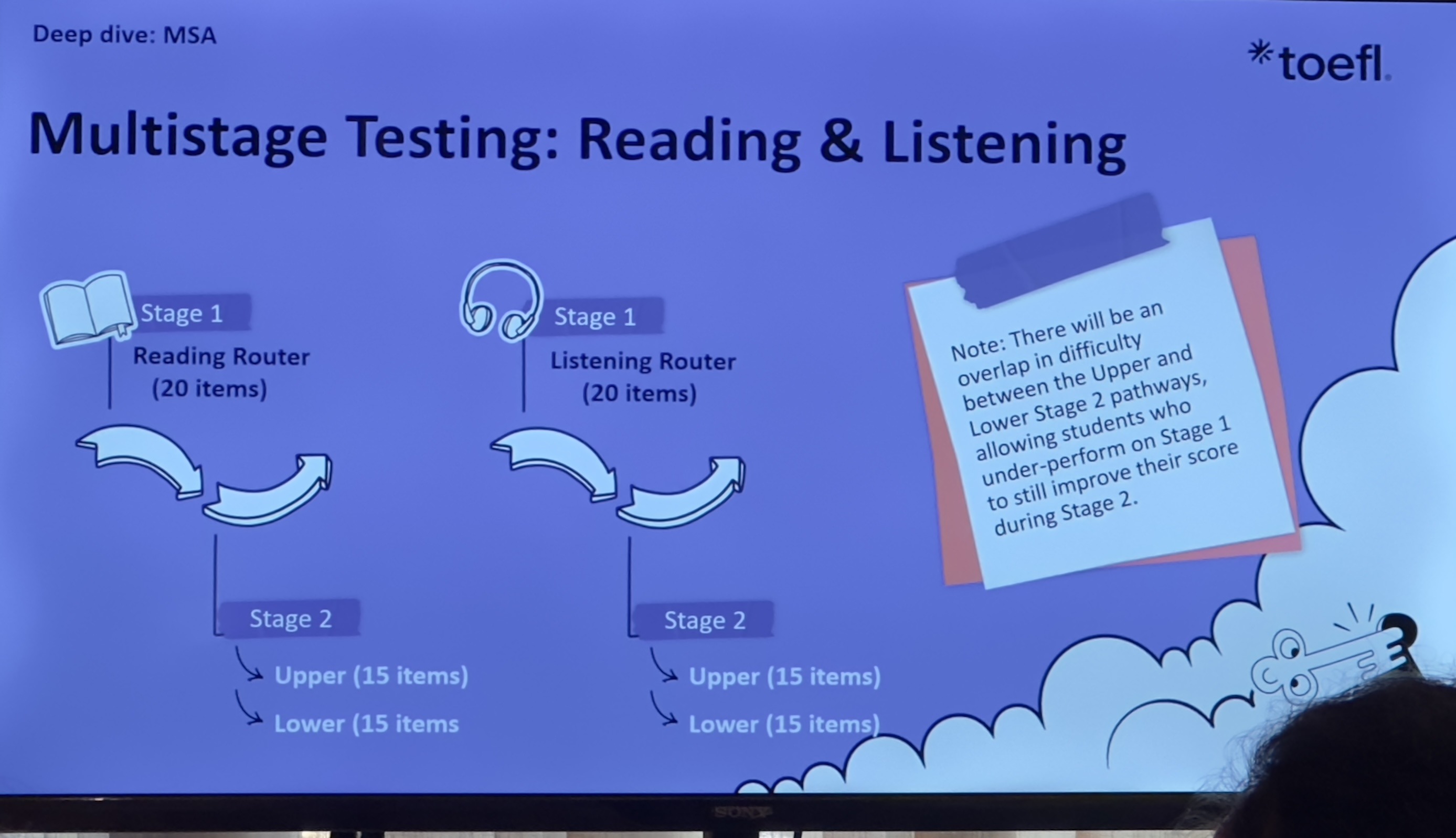
The Reading and Listening sections shift to a multistage adaptive model, where question difficulty adjusts dynamically based on initial performance, optimizing challenge levels for accuracy. Reading now features 35-48 items over 18-27 minutes, drawing from updated academic texts like scholarly articles and 21st-century publications. Listening mirrors this with 35-48 items in 18-27 minutes, emphasizing realistic campus dialogues, lectures, and everyday interactions. This personalization reduces fatigue and provides a more precise skill evaluation.
Writing evolves into a concise 23-minute segment with 12 tasks, blending foundational exercises like sentence building and email composition with integrated discussions requiring summary and response skills. Speaking condenses to 8 minutes across 11 prompts, including sentence repetition for pronunciation accuracy and structured interviews simulating real academic exchanges. These modifications prioritize practical communication over rote memorization, aligning closely with university expectations.
TOEFL iBT introduces section-specific updates starting January 21, 2026, making the test shorter, adaptive, and more aligned with modern academic English. Reading and Listening become multistage adaptive, while Writing and Speaking feature new task types with reduced times. These changes apply only to tests after January 20, 2026.
Reading Section
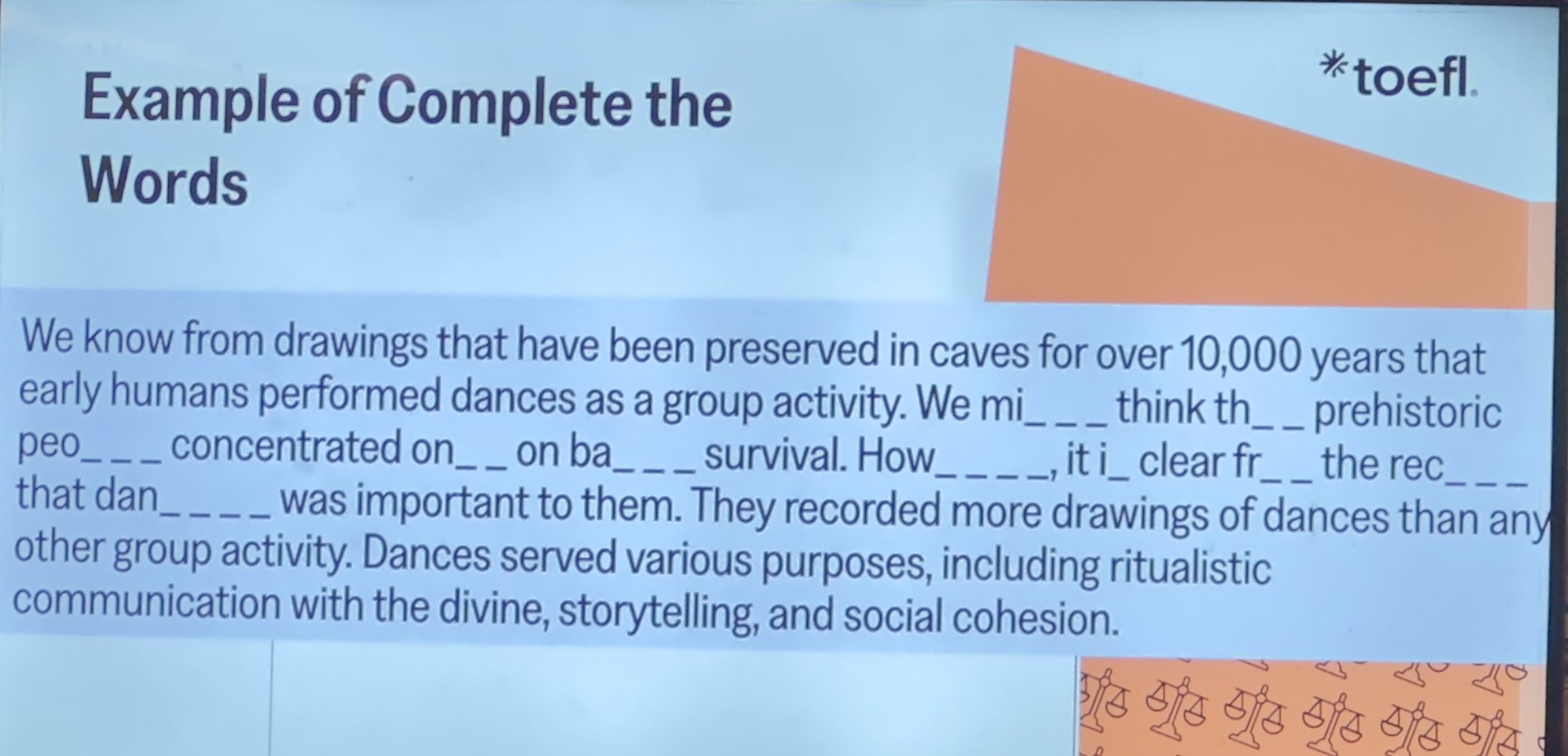
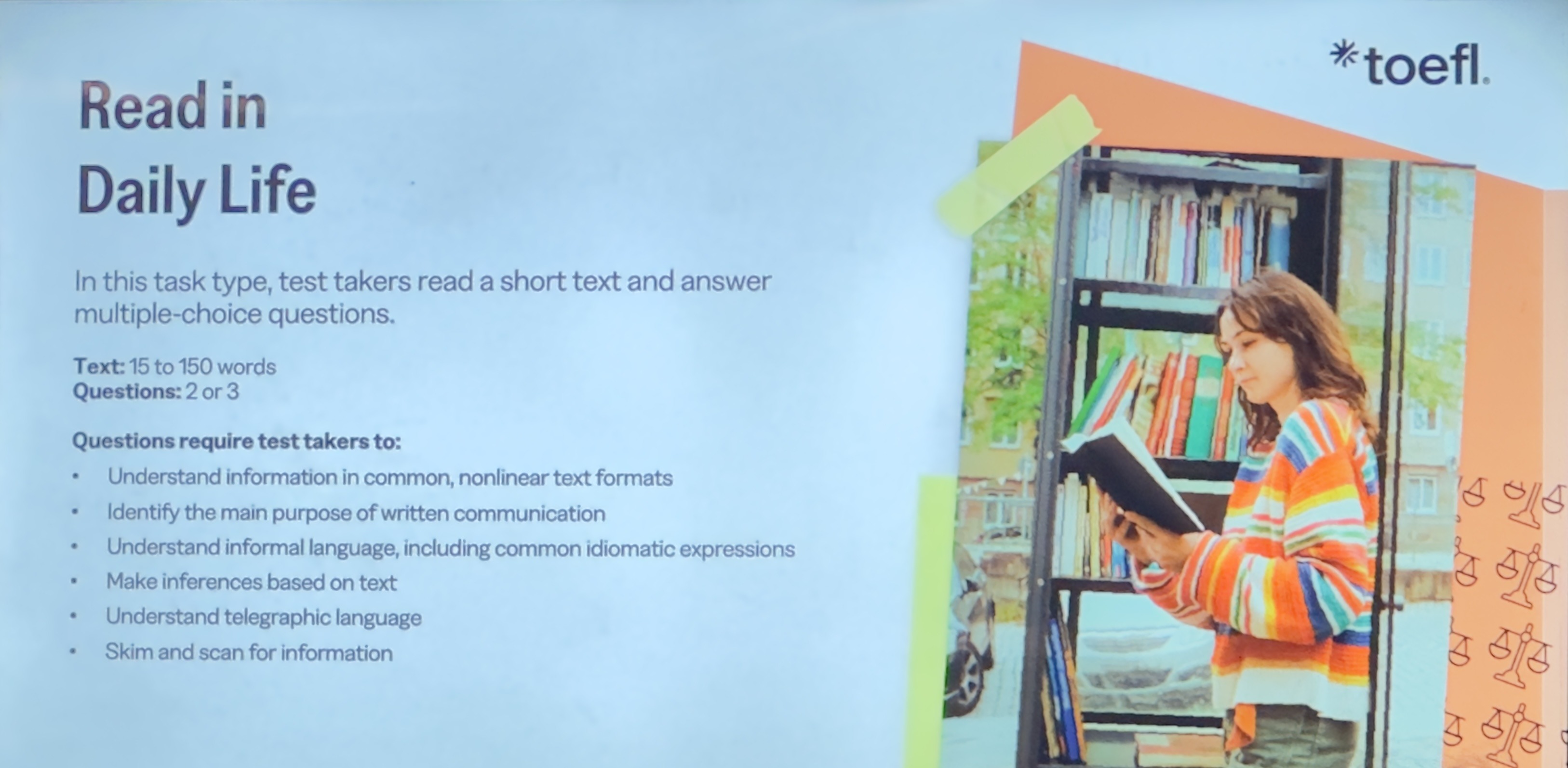
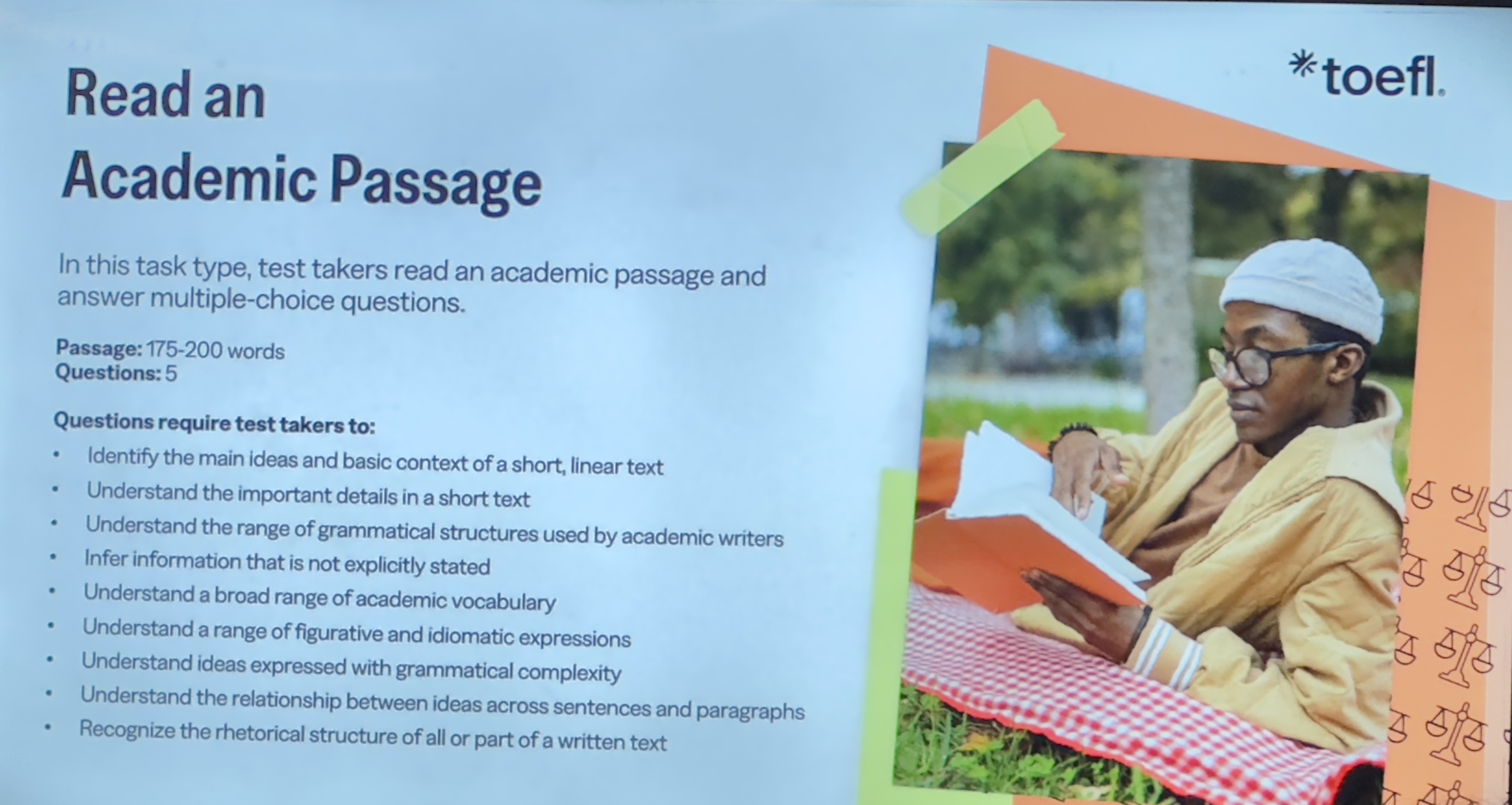
In this module, there will be three questions Complete the Words, Read in Daily Life and Read an academic Passage as mentioned in the image below with length and number of questions for each category.
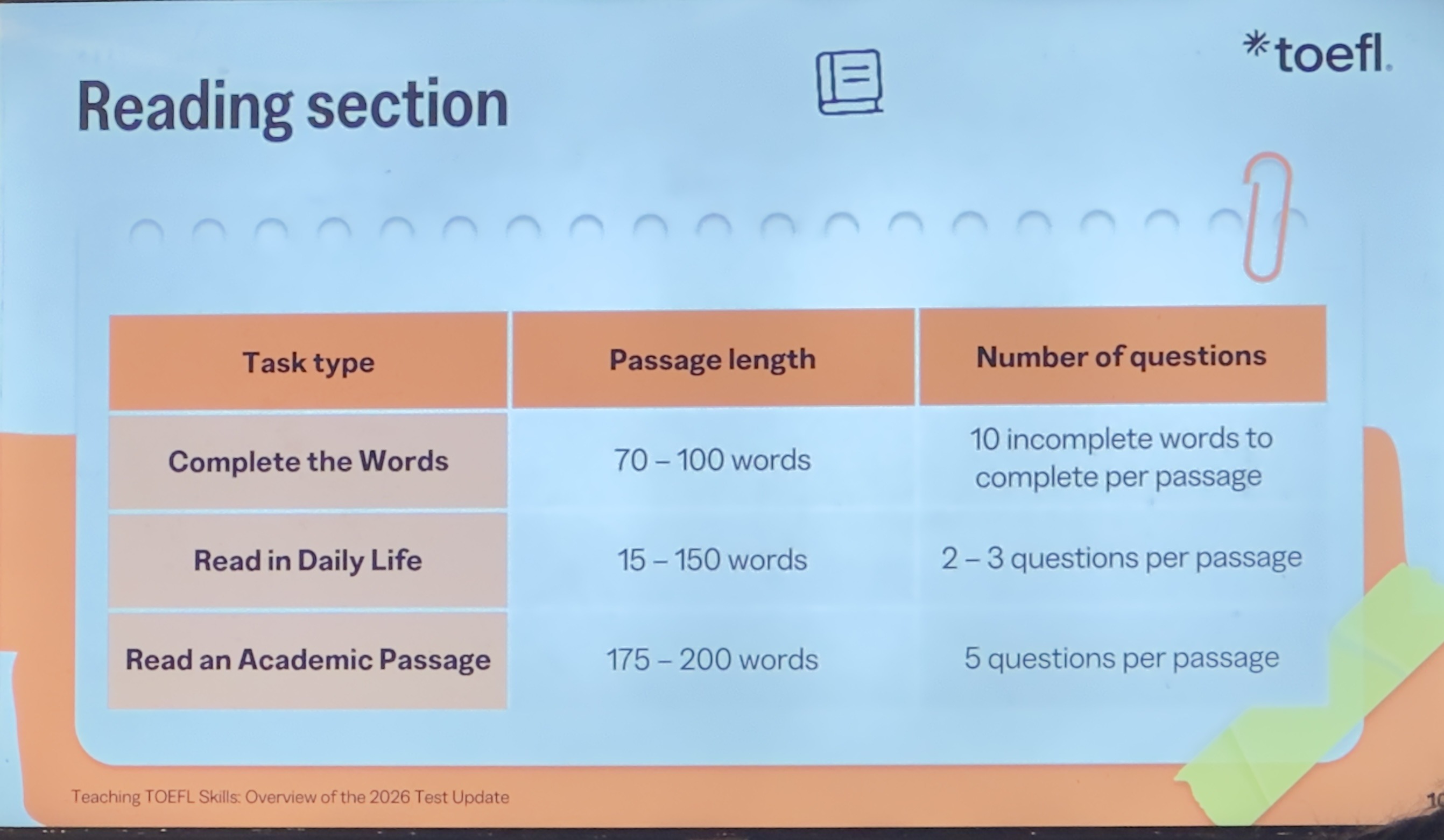
Reading shifts to an adaptive format with 35-48 questions over 18-27 minutes, adjusting difficulty based on early performance across multiple stages. Passages draw from contemporary sources like academic articles, magazines, and interdisciplinary texts, emphasizing real-world comprehension over outdated topics. This replaces the prior 3-4 passages with 54-72 minutes, focusing on efficiency and personalization.
Listening Section
In this module, there will be four type of questions:
- Listen and choose a Response
- Listen to conversation
- Listen to announcement
- Listen to academic talk
Similar to Reading, Listening adopts adaptive testing with 35-48 items in 18-27 minutes, covering lectures (3 items, 3-5 minutes each with 6 questions) and conversations (2 items, 3 minutes each with 5 questions). Content modernizes to include campus dialogues, podcasts, and global academic discussions, eliminating random unscored items from the old 41-57 minute structure. Visuals like graphs enhance integrated listening skills.
Writing Section
In this module, there will be two type of questions: Build a sentence and Write an email.
Writing condenses to 12 tasks in 23 minutes, incorporating sentence building, email responses, and academic discussions requiring summaries. This evolves from the previous integrated (20 minutes) and independent (30 minutes) tasks, prioritizing practical writing like concise arguments over lengthy essays. The format tests quick synthesis and clarity for academic contexts.
Speaking Section
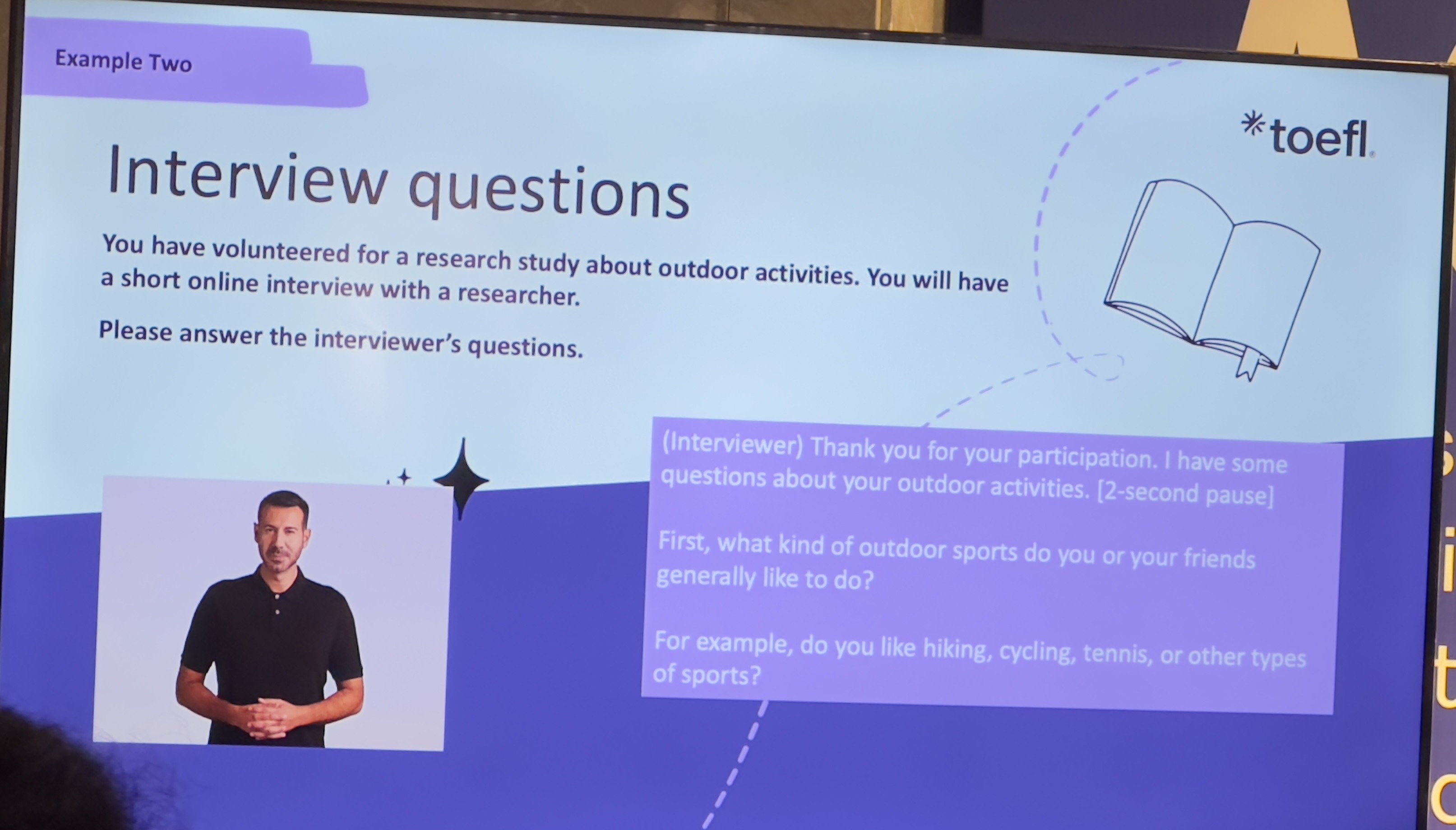
In this module, there will be two of new questions Listen and Repeat(7 questions), second one is Take an interview (4 questions).
Speaking shortens to 11 prompts in 8 minutes, featuring sentence repetition for pronunciation and structured interviews simulating real exchanges. Traditional tasks (independent opinion, integrated campus/academic) are fully replaced, emphasizing fluency in brief, realistic scenarios without extended prep time. This overhaul aims for authentic communication assessment.
Scoring Impact
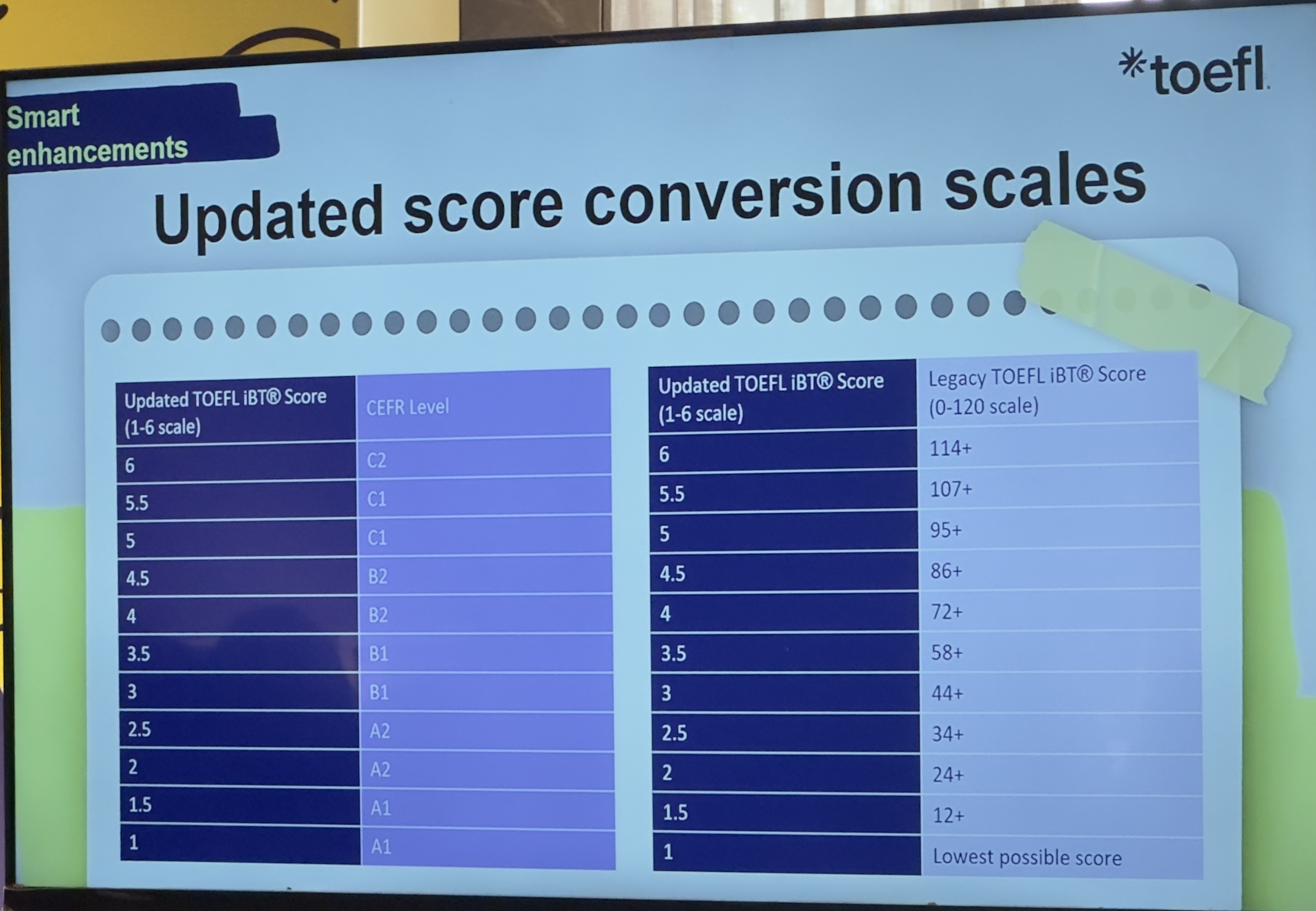
All sections now score 1.0-6.0 (0.5 increments), averaged for a total band aligned with CEFR, replacing 0-30 per section/0-120 total. Dual reporting aids transition through 2028, with scores available faster.
Revamped Scoring and Reporting
A pivotal shift replaces the familiar 0-120 total scale with section scores from 1.0 to 6.0 in 0.5 increments, averaged for an overall band score aligned with CEFR levels (A1-C2). This granular system better reflects communicative competence, with faster score releases—typically within days—via streamlined digital processes. During the 2026-2028 transition, dual reporting (old and new scales) ensures compatibility for institutions, minimizing application disruptions. Percentile ranks and descriptive proficiency levels accompany scores for comprehensive insights.
Content Modernization Drive
Themes refresh to mirror current academia: Reading pulls from magazines, blogs, and interdisciplinary sources; Listening incorporates podcasts, discussions, and lectures on global topics. Visual aids like graphs and multimedia enhance engagement, testing integrated skills akin to real coursework. This update addresses feedback on outdated materials, fostering authenticity for diverse test-takers, including those pursuing study abroad from regions like India.
Strategic Preparation Advice
Leverage ETS official practice materials, now updated with adaptive simulations and sample responses, to familiarize with new timings and question types. Focus on time management drills, as shorter sections demand quick thinking—aim for 30-45 seconds per Reading item. Build vocabulary through contemporary sources like TED Talks or academic journals. For Indian students targeting IELTS alternatives on platforms like WayToCrackIELTS.com, integrate these changes into prep courses early. Register promptly via ETS to secure preferred dates and formats, noting home and center-based options persist.
Implications for Test-Takers
These enhancements reduce test length by nearly half (from ~2 hours to under 90 minutes), boosting accessibility without compromising rigor. Validity studies confirm the new format’s reliability, with no impact on score acceptance at over 13,000 institutions worldwide. For content creators and educators, this opens avenues for updated tutorials on adaptive strategies and CEFR mapping, vital for student success in competitive admissions cycles.
Get our Latest Post/Blogs here.