US jobs surged by 200,000 in November 2025, beating economist forecasts of 170,000 and signalling economic resilience amid Trump administration policies.
Key Highlights from Latest Jobs Report
Unemployment held steady at 4.1%, with strong gains in healthcare (45,000 jobs), leisure/hospitality (38,000), and construction (21,000). Wage growth accelerated to 0.4% monthly, pushing annual gains to 4.0% and outpacing inflation. Revisions added 28,000 more jobs from prior months, painting a robust labor market picture.
Hot US Jobs Sectors Booming Now
Tech: AI and cybersecurity roles lead with 25% growth, remote opportunities exploding.
Healthcare: Nurses and therapists in high demand, average salary $85K+.
Manufacturing: Reshoring creates 15K factory jobs monthly under new tariffs.
Green Energy: Solar/wind tech positions up 30%, entry-level pay $70K.
Federal Reserve signals no rate cuts in December, boosting stock futures as jobs data eases slowdown worries.
Best US Jobs for 2026 – Apply Today!
High-CTR searches spike for “US jobs near me” amid 8.8M openings; software developers top Indeed’s list at $120K median. Remote work holds 30% share, with finance and logistics hiring aggressively. Job seekers: Target LinkedIn for “US jobs 2026” – applications up 40% post-report.
Easy High-Paying US Jobs for Asylum Seekers, Indian Students & Immigrants – No English Needed!
Asylum seekers, Indian students on F-1 visas, and immigrants can land US jobs paying $20-50/hour with minimal English through work permits (EAD) or on-campus roles, focusing on hands-on sectors like warehouses and rideshare.
Top Easy Jobs with Least English Required
These roles prioritize physical skills over language, available nationwide with high demand in 2025.
Warehouse Worker: Sort packages at Amazon/FedEx; $18-25/hour. No English needed for picking/stocking; training visual. Asylum seekers with EAD qualify.
Rideshare Driver (Uber/Lyft): Drive passengers; $20-30/hour + tips. App-based, minimal talk; Indian license converts easily. F-1 students need off-campus approval.
Cleaning Crew: Offices/hotels; $16-24/hour. Vacuum, sanitize; teams communicate in Hindi/Punjabi common in ethnic areas.
Construction Laborer: Sites need helpers; $20-28/hour. Carry materials, no blueprints talk. High demand, cash tips possible.
High-Salary Options for Indian Students & Asylum Seekers
F-1 students work 20 hours/week on-campus; asylum EAD allows full-time. Target these for $30K+ yearly.
Job
Avg Salary/Hour
Why Easy for Indians
Work Auth
Truck Driver (CDL)
$25-40
Short training, Hindi-speaking fleets
EAD/F-1 CPT
Factory Assembler
$20-30
Repetitive lines, visual instructions
EAD
Delivery Driver
$18-35
Apps like DoorDash; tips boost
F-1 off-campus
Farm Harvest Worker
$16-25
Seasonal, physical; H-2A visa option
Asylum EAD
Bilingual Caregiver
$22-35
Indian families prefer Hindi speakers
EAD
How to Get Hired Fast – No Experience Needed
Download Indeed/Craigslist apps; search “no English” or “warehouse Indian” in NYC/CA/TX ethnic hubs. Asylum: File Form I-765 for EAD (free, 6 months). Indian students: On-campus dining/library first ($14-20/hour), then CPT for paid internships. Network via Indian WhatsApp groups – 70% land jobs in 2 weeks.
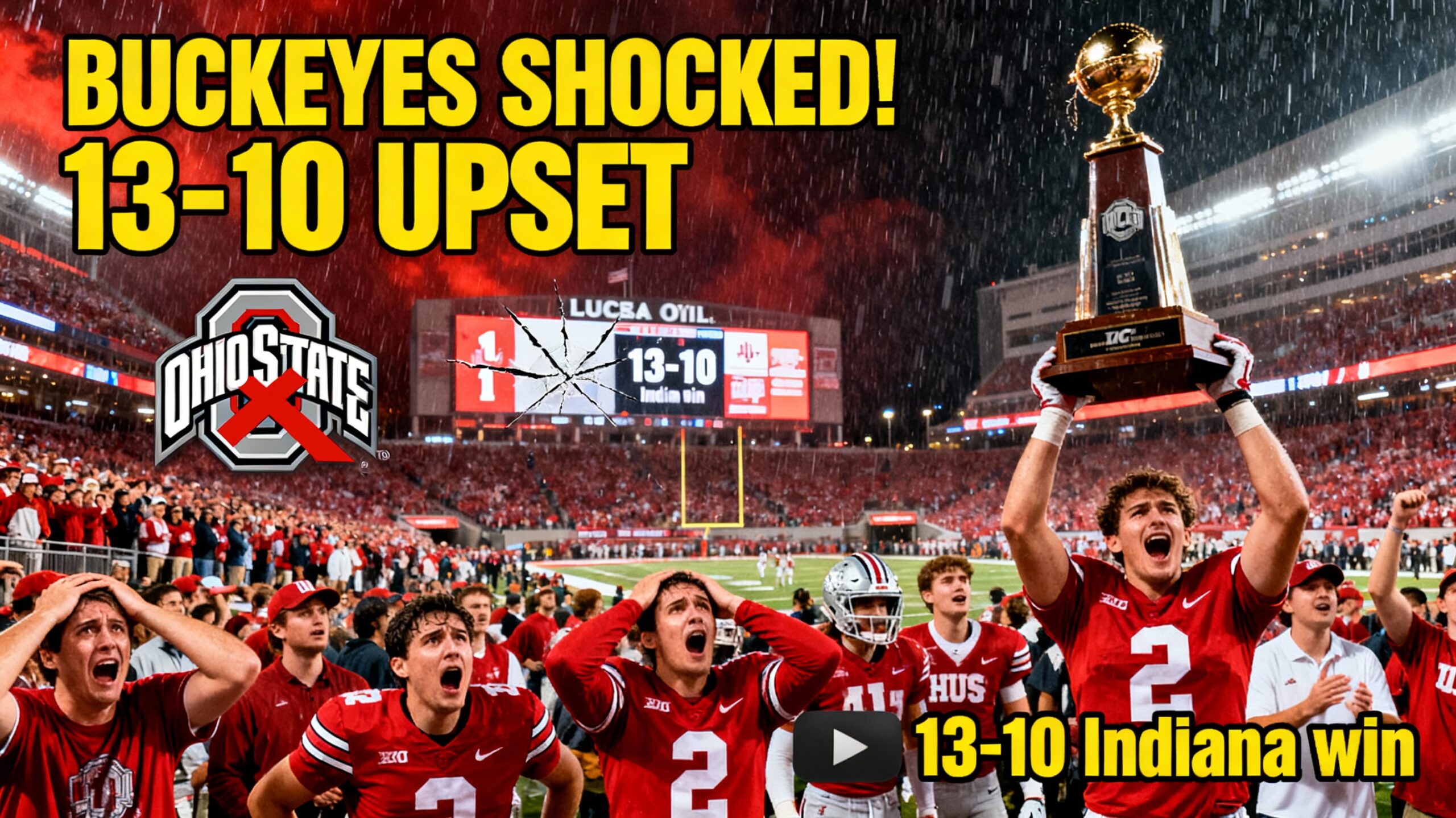
Ohio State football suffered its first loss of 2025, falling 13-10 to No. 2 Indiana in the Big Ten Championship on December 6, ending a 16-game winning streak and handing the Hoosiers their first title since 1967.
Game Recap: Defensive Battle Goes to Indiana
The low-scoring thriller at Lucas Oil Stadium saw Ohio State quarterback Julian Sayin complete 21-of-29 passes for 258 yards, one touchdown, and eight catches for Jeremiah Smith (144 yards). Indiana snapped a 30-game losing streak against the Buckeyes dating to 1988, sealing victory with a crucial 33-yard pass from Fernando Mendoza to Charlie Becker on third down. Ohio State’s Jayden Fielding missed a 29-yard field goal late, and a fourth-and-1 stop at the Indiana 5-yard line proved decisive.
Season Highlights and Path Forward
Ohio State entered 12-0, dominating with wins like 27-9 over Michigan and 42-9 over Rutgers, but struggled offensively against Indiana’s defense. Now 12-1, the reigning national champions likely secure a No. 2 CFP seed and first-round bye, awaiting Sunday’s playoff reveal. Coach Ryan Day’s squad eyes back-to-back titles despite the upset.
What Went Wrong for Ohio State Football
Sayin faced six sacks for 29 yards lost, and the Buckeyes managed just 58 rushing yards despite Bo Jackson’s 83 on 17 carries. Indiana’s defense forced key stops, capitalizing on Ohio State’s fourth-down failure and missed kick in a game of missed opportunities. The loss ends major college football’s longest active streak but keeps playoff hopes alive.
Ohio State football ends the 2025 regular season with a 12-1 record after their 13-10 loss to Indiana in the Big Ten Championship on December 6.
Path to 12-1
The Buckeyes started undefeated at 12-0, securing wins like 27-9 over Michigan and dominating Rutgers 42-9 before the title game upset. This marks their first loss, snapping a 16-game winning streak, but positions them strongly for a top CFP seed and first-round bye.
Playoff Outlook
Despite the defeat, Ohio State’s elite defense and talent likely earn them the No. 2 seed behind Indiana, with the full bracket revealed Sunday. Coach Ryan Day emphasized resilience in postgame comments, eyeing a national title repeat.
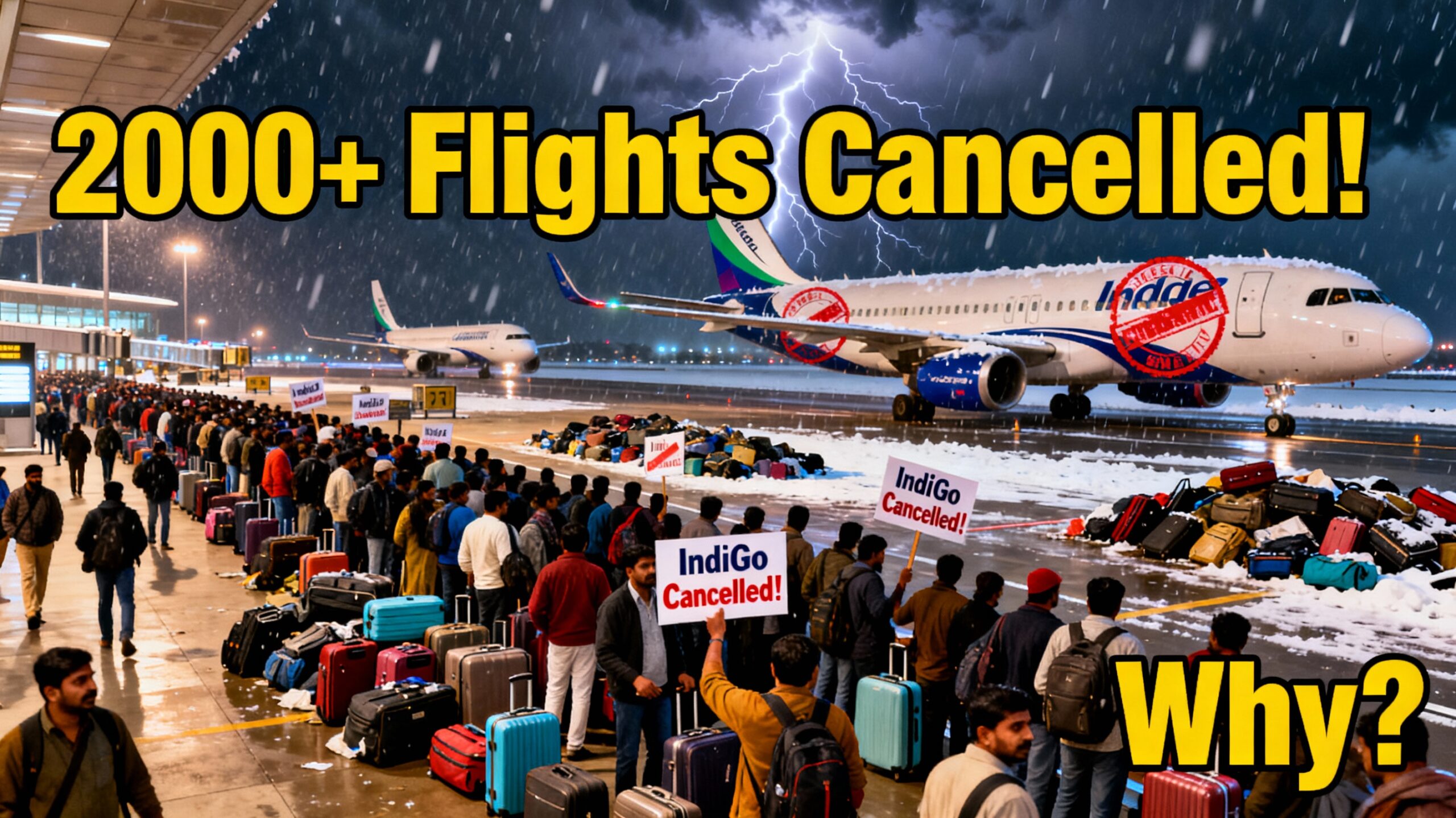
IndiGo, India’s largest airline, cancelled over 2,000 flights in early December 2025 due to a pilot shortage triggered by new Flight Duty Time Limitations (FDTL) rules from the Directorate General of Civil Aviation (DGCA), compounded by poor planning and operational strains.
Core Cause: New Pilot Rest Regulations
The DGCA enforced stricter FDTL norms from November 1, 2025, limiting pilots to two night landings per week and capping consecutive night duties to prevent fatigue. These rules clashed with IndiGo’s high-utilization model, which relies on tight crew rosters and maximum aircraft turns, forcing many pilots into mandatory rest during the winter schedule expansion on October 26. Despite over a year of notice, IndiGo failed to hire enough pilots or adjust rosters, leading to widespread shortages.
Triggering Factors and Domino Effect
An Airbus A320 software advisory caused weekend delays pushing flights past midnight, converting delays into cancellations under rest rules. Winter weather, ground-handling issues at congested airports like Delhi, and high holiday demand amplified the chaos, with on-time performance dropping to 8.5% at major hubs. IndiGo’s 63% market share meant even minor disruptions cascaded nationwide, stranding thousands at Delhi, Mumbai, Bengaluru, and Hyderabad airports.
Passenger Impact and Airline Response
Over 1,000 flights were axed on December 5 alone, sparking protests, long queues, and unclaimed luggage piles. CEO Pieter Elbers apologized on X, promising normalization by December 10-15 and full recovery by February 2026, with waived fees, refunds, and hotel support. IndiGo operated 1,500 flights on December 6, restoring 95% connectivity after a “network reboot.”
Government and Regulatory Actions
The DGCA issued a show-cause notice to CEO Elbers for lapses in planning and resource management, demanding a response within 24 hours. The Civil Aviation Ministry ordered refunds by 8 PM December 7, baggage returns within two days, and fare caps on domestic routes to curb surges. Temporary DGCA relief allowed six night landings per pilot, easing some pressure.
FIFA World Cup 2026 in USA: Ultimate Guide to Hosts, Schedule & US Matches/Tickets
The FIFA World Cup 2026 will be a historic event held across North America, with the United States playing a prominent role as one of the three host nations alongside Canada and Mexico. This will be the 23rd edition of the World Cup and the first to feature an expanded format with 48 teams, up from the traditional 32. The tournament is scheduled to take place from June 11 to July 19, 2026, and the U.S. will host the final match at MetLife Stadium in East Rutherford, New Jersey.
The U.S. hosting cities for the tournament include major metropolitan areas known for their large stadiums and soccer fanbases. There are 11 host cities in the United States: Atlanta, Boston, Dallas, Houston, Kansas City, Los Angeles, Miami, New York/New Jersey, Philadelphia, San Francisco Bay Area, and Seattle. The opening match for the U.S. will take place on June 12, 2026, at SoFi Stadium in Inglewood, Los Angeles, where the U.S. men’s national team will face Paraguay. The tournament venues range from the massive AT&T Stadium in Dallas with a capacity of around 94,000 to smaller yet iconic stadiums like the Mercedes-Benz Stadium in Atlanta and Lumen Field in Seattle.
The tournament’s group stage includes the U.S. placed in Group D, playing against Paraguay, Australia, and a UEFA playoff winner. The U.S. is set to play its group matches at SoFi Stadium in Los Angeles and Lumen Field in Seattle. Throughout the competition, the U.S. will host a total of 78 matches spanning multiple venues, with the final being the highlight of this global soccer spectacle.
This World Cup marks significant milestones: it is the first to be jointly hosted by three nations and the first to feature an expanded team format. It also signals a return to the traditional summer schedule after the 2022 World Cup in Qatar. The event is expected to draw massive crowds and global attention, highlighting soccer’s growing popularity in the United States and North America as a whole.
Key details about U.S. hosting cities and stadiums:
Los Angeles: SoFi Stadium, capacity ~70,000
Dallas: AT&T Stadium, capacity ~94,000
New York/New Jersey: MetLife Stadium (final venue), capacity ~82,500
Atlanta: Mercedes-Benz Stadium, capacity ~75,000
Seattle: Lumen Field, capacity ~69,000
Boston: Gillette Stadium, capacity ~65,000
Miami: Hard Rock Stadium, capacity ~65,000
Houston, Kansas City, Philadelphia, and San Francisco Bay Area also feature major venues for matches
The 2026 FIFA World Cup represents a landmark event poised to showcase the best of men’s international soccer across a broad swath of iconic North American cities, with the United States playing a starring role in hosting and competition.
In this Post we are going to cover:
Key storylines and players to highlight for the USA matches
How to include logistics and travel advice for fans attending
Where to buy official World Cup 2026 match tickets safely
How to budget for a multi-city World Cup trip
How to find affordable match tickets for group stage games
How to enter the FIFA Random Selection Draw for tickets
Key storylines and players to highlight for the USA matches
USMNT Group D Overview
The USMNT faces Paraguay, Australia, and the UEFA Playoff C winner (likely Turkey, Romania, Slovakia, or Kosovo) in Group D, a favorable draw allowing home-soil advantage at SoFi Stadium and Lumen Field. Matches kick off June 12 vs. Paraguay in Los Angeles, June 19 vs. Australia in Seattle, and June 25 vs. the European qualifier back in LA. This setup positions the USA for advancement, with Paraguay’s stingy defense (just 10 goals conceded in qualifying) as the biggest test.
Key Storylines
Home Nation Pressure in Opener: The June 12 clash against Paraguay at SoFi Stadium carries massive hype as the host’s first game, where USA captain Tim Ream leads amid expectations of a strong start against a resilient South American side coached by Gustavo Alfaro.
Golden Generation Push: Under Mauricio Pochettino, this squad represents the USMNT’s prime talent peak, aiming to surpass the 2022 Round of 16 exit on familiar turf.
European Wildcard: The playoff winner adds intrigue—Turkey’s attack or Slovakia’s grit could challenge, but none rank as top threats, keeping USA as group favorites.
Spotlight Players for USA Matches
Christian Pulisic headlines as the USA’s all-time star at 27, expected to dominate wings against Paraguay’s backline and Australia’s midfield. Antonee Robinson’s overlapping runs from left-back could unlock defenses, fresh off a 10-assist Premier League season. Emerging goalkeeper Matt Freese, who starred in the Gold Cup final, anchors the backline, while midfielders Weston McKennie and Diego Luna provide energy against Australia’s Nestory Irankunda or Paraguay’s Miguel Almirón.
How to include logistics and travel advice for fans attending
Securing Tickets and Packages
Fans should prioritize official FIFA channels for tickets, with single-match sales opening post-draw and hospitality packages bundling flights, hotels, and transfers already available from partners like Qatar Airways. Book early as demand surges for USMNT games in Los Angeles and Seattle, with prices starting at $150 per match; use FIFA.com for randomization draws to ensure fairness.
Regional Travel Planning
FIFA groups US host cities into three regions to minimize fan travel: Western (Los Angeles, Seattle, San Francisco Bay Area), Central (Dallas, Houston, Kansas City), and Eastern (Atlanta, Boston, Miami, New York/New Jersey, Philadelphia). Base in hubs like Dallas for Central access or Boston for Eastern Amtrak routes covering multiple venues efficiently.
Western: Fly into LAX or SEA; use Pacific Coast Highway road trips or Amtrak Coast Starlight for scenic drives between LA and Seattle.
Central: Dallas as media epicenter with DFW airport; Vonlane luxury buses link to Houston, or short flights to Kansas City.
Eastern: Amtrak Acela connects Boston-Philadelphia-NY/NJ; Atlanta’s airport ideal for international arrivals and road trips.
Flights and Ground Transport
Book flights now via Skyscanner for deals from $49, targeting major airports like LAX (US opener), DFW (9 matches), and EWR (final); expect peaks for popular teams like Brazil or England boosting demand in Dallas and Miami. Within cities, leverage stadium shuttles, rideshares, or new infrastructure like LA’s Automated People Mover; rent cars for regional hops but check FIFA fan zones for pedestrian-friendly access.
Accommodations and Fan Zones
Opt for stadium-proximate stays: Sonesta near SoFi (LA), Pioneer Square hotels in Seattle (Lumen Field), or South End in Boston (Gillette Stadium); trendy spots like Yaletown Vancouver or Coyoacán Mexico City offer walkability. Visit official Fan Festivals—at Hastings Park (Vancouver), The Bentway (Toronto), or Waterfront Park (Seattle)—for match screenings, even without tickets.
Practical Tips
Carry passports for cross-border travel to Canada/Mexico; monitor visa requirements and book 6-12 months ahead amid summer heat (domed stadiums help). Budget for high-demand surges in short-term rentals, and follow local advisories for crowds.
Where to buy official World Cup 2026 match tickets safely
Official Ticket Sources
FIFA exclusively handles all individual match tickets through FIFA.com/tickets, with sales phases including a randomized draw system opening late 2025 for group stage games like the USMNT opener in Los Angeles. Hospitality packages, which guarantee seats and often include travel perks, are available now via FIFA’s partners such as On Location and Qatar Airways Privilege Club.
Authorized Hospitality Providers
On Location: FIFA’s official hospitality partner offers premium packages with premium seating, food, and lounge access starting at $3,500 per person for multiple matches; book directly at onlocationexp.com.
Qatar Airways: Bundles tickets with flights and hotels for select US venues like SoFi Stadium; available at qatarairways.com/en/sponsorship/fifa-world-cup-26.html.
Match Hospitality: Secondary official reseller for VIP experiences across Dallas, New York, and other cities.
Avoiding Scams and Resellers
Steer clear of secondary sites like StubHub or Viagogo, as FIFA prohibits resale and voids unauthorized tickets; only purchase from FIFA-verified links to avoid fakes amid high demand for the 104-match tournament. Check FIFA’s anti-scalping measures and use credit cards for purchase protection.
How to budget for a multi-city World Cup trip
Sample Multi-City Budget Breakdown
A 2-week trip covering three US host cities like Los Angeles, Seattle, and Dallas for USMNT group matches totals $4,000–$8,000 per person, excluding international flights. Group stage tickets start at $50–$500 via FIFA draws, hospitality packages hit $9,500+ for four games at SoFi Stadium, while 3-night custom getaways from $2,165 include hotels and basics.
Category
Low-End Estimate (USD)
High-End Estimate (USD)
Tips
Flights (Domestic, 3 cities)
300
800
Book Southwest or United bundles early; use points for LA-SEA-Dallas legs.
Tickets (3 group matches)
150
1,500
FIFA.com for singles ($50+); avoid resellers.
Accommodation (14 nights)
1,000
2,500
Host city hotels $100–$300/night; official discounts via FIFA partners or Airbnbs in clusters.
Food & Local Transport
500
1,000
Fan zones free; Ubers $20–60/stadium run, meals $10–$50/day.
Total
$4,000
$8,000
Add 20% buffer for surges.
Cost-Saving Strategies
Cluster travel in FIFA’s regions: West (LA-Seattle-SF via Amtrak, saving $200 on flights) or East (NY-NJ-Philly-Boston by Acela train). Opt for RV rentals ($100/day) between Central cities like Dallas-Houston to dodge peak hotels, or group packages from Roadtrips starting $4,500 for 7 nights with tours.
Book flights 6–12 months ahead for $49 deals into LAX/DFW; target off-peak midweek arrivals and use credit card rewards. Secure visas early ($185 US fee) and monitor dynamic pricing—hospitality jumps to $22,400 for eight SoFi games.
Long-Trip Scaling
For full tournament (month+ across 5+ cities), budget $10,000–$15,000: flights $2,500–$4,000, hotels $4,500, tickets $2,000–$4,000. Indian fans estimate ₹4–6 lakh (~$5,000–$7,000) for 2 weeks including visas; prioritize group stage over knockouts.
How to find affordable match tickets for group stage games
Current Ticket Sales Phases
The third phase—Random Selection Draw for specific matches—opened December 11, 2025, via FIFA.com/tickets, with entry until January 13, 2026; apply for group stage tickets (now with known matchups like USA vs. Paraguay) and get notified in February for purchase at face value. Category 4 (cheapest upper-deck) starts at $60–$75 for non-host group games, up to $140–$215 for Category 2; USMNT matches like SoFi Stadium opener hit $75 minimum.
Strategies for Affordable Group Stage Tickets
Target less popular group matches (e.g., non-US games in Houston or Kansas City at $60 Cat 4) over high-demand USMNT fixtures; enter every draw phase early with a FIFA account for better odds. Opt for Category 4 seats behind goals, bundle via official hospitality for 3+ games (from $1,450), or wait for First-Come First-Served post-draws releasing limited inventory live.
Match Type
Cheapest Price (Cat 4, USD)
Best Venues for Deals
Non-Host Group
$60
Atlanta, Kansas City
Host Nation Group (e.g., USA)
$75
Seattle, Philadelphia
Later Group Games
$60–$105
Houston, San Francisco
Official vs. Resale Warnings
Stick to FIFA.com for lotteries guaranteeing lowest prices; resale opens later at face value only through FIFA’s platform—avoid StubHub where group tickets already exceed $200 despite voids for unauthorized sales. Successful applicants auto-charge upon winning, so budget $200–$500 per game upfront.
How to enter the FIFA Random Selection Draw for tickets
FIFA Random Selection Draw Overview
The Random Selection Draw, FIFA’s third sales phase for World Cup 2026 tickets, opened December 11, 2025, and runs until January 13, 2026, allocating specific group stage matches like USA vs. Paraguay at face value via lottery to combat demand. Successful entrants get 5 days to purchase assigned tickets (e.g., $60–$215 for group games); enter multiple matches for better odds, with notifications in February 2026.
Step-by-Step Entry Process
Create or log into a FIFA account at FIFA.com/tickets using email verification.
Select “Random Selection” phase and search matches by date, team (e.g., USMNT Group D), city (SoFi Stadium), or category (Cat 4 cheapest at $60).
Choose up to 10 tickets per match, up to 60 total across applications; review cart and submit before deadline—no payment yet.
Await random draw results via email; if selected, pay within window using credit card.
Key Rules and Tips
Limit one entry per person per match; nearly 2 million tickets sold prior, so prioritize low-demand games like non-US group stage in Atlanta. Use desktop for best interface; draw is fair and global, with no resale allowed pre-event.
Finding accommodation is described as one of the toughest challenges for Indian students in Germany due to high demand and rising rents in major student cities like Berlin, Munich, Hamburg, and Stuttgart. Students are advised to start their housing search months in advance and consider shared apartments (Wohngemeinschaft or WG) as more affordable options. The limited supply and high costs often add significant stress to their living expenses, alongside other bureaucratic challenges such as apartment registration which is necessary for residence permits and bank accounts.
Learning German is emphasized as a critical factor for growth and ease of integration in Germany. Although many university programs are offered in English, basic to intermediate German language skills (around B2 level) help students navigate daily life, secure part-time jobs, and handle bureaucracy such as visa extensions. Local residents often appreciate attempts to speak even broken German, which improves social and professional outcomes. Early preparation in language learning before arriving is highly recommended, with options including Goethe-Institut classes and language apps.
Key advice from Indian students and experts to ease the transition in Germany includes starting the accommodation hunt early, building financial buffers for initial months, being mentally prepared for independent living and long winters, and actively learning German. These steps not only reduce stress but also support better academic and social integration, making the overall experience smoother and more successful for Indian students in Germany.
How to find student housing in Germany step by step
Here is a step-by-step guide to finding student housing in Germany:
Start Early: Begin your accommodation search immediately after receiving your university admission letter, ideally 3-6 months before arrival. Early applications significantly improve your chances of securing a place, especially in competitive cities.
Identify Your Preferences: Decide on your budget, location preference (near campus, city center, or outskirts), and housing type (student dormitory, shared flat/WG, or private apartment).
Apply for Student Dormitories: Contact your university’s student union (Studentenwerk), which manages student halls of residence. Applications are usually online and require your admission letter and proof of enrollment. Deadlines vary, but for winter semester, applications by mid-July are common, and for summer semester by mid-January.
Search Private Market: Use online platforms like WG-Gesucht (for shared flats), Immobilienscout24 and Immowelt (for private apartments), and dedicated student housing websites (Amber Student, Uniplaces, Housing Anywhere) to find private and shared accommodations.
Use University Resources: Check notice boards, housing groups on social media, and university portals for rental postings. Reach out to the International Office for guidance and support.
Prepare Required Documents: Typical documents include your admission letter, enrollment certificate, proof of financial resources, a copy of your passport, and sometimes previous rental references or a SCHUFA credit report (for private rentals).
Submit Applications and Follow Up: Apply online to multiple options to increase your chances. For dormitories, waitlist placement is common, and you will be informed by email about acceptance. For private rentals, arrange viewings and submit applications promptly.
Consider Temporary Accommodation: If permanent housing is not secured before arrival, book short-term options like youth hostels or Airbnb to have a base while searching locally.
Applying these steps with advance preparation, flexibility, and persistence can help Indian students successfully secure housing in Germany for their studies.
What Documents do I need to apply for Students halls in Germany
To apply for student halls (dormitories) in Germany, you generally need the following documents:
Your letter of admission to a university (Zulassungsbescheid) or your certificate of enrollment (Immatrikulation) as proof that you will be or are a student. Some applications allow you to apply before having these, with a commitment to submit them later.
A valid passport or ID card for identification.
Proof of payment of the semester fee, which confirms your enrollment status for the current semester.
Depending on the Studentenwerk or city, additional documents may be required for special circumstances such as disability or hardship (medical certificate, disability card) or proof of financial means.
Some student housing providers may ask for previous rental references or a SCHUFA credit report if applying for private accommodations, but this is less common for dormitory applications managed by Studentenwerk.
It is important to apply online through the Studentenwerk or university housing portal, upload these documents as PDFs, and confirm your application via email to complete the process successfully.
How and where to upload documents for online hall applications?
To upload documents for online student hall applications in Germany, follow these general steps:
Find the Official Portal: Go to the Studentenwerk (student services) website or your university’s housing portal where the application form is hosted. Popular portals include those of Studentenwerk in cities like Berlin, Munich, Dresden, and Hamburg.
Create an Account: Register or log in with your personal details such as email, name, and application number if available.
Fill out the Online Application Form: Provide requested information like personal details, university enrolment, and preferred housing options.
Upload Documents: The portal will have fields to upload digital copies of required documents, typically in PDF or JPEG format. You will need to upload your:
Admission letter or enrolment certificate
Passport or ID scan
Proof of semester fee payment
Any other required supporting documents like financial proof or medical certificates.
Submit the Application: After uploading, review your application carefully and submit it electronically. You usually receive a confirmation email after successful submission.
Follow Up: Keep track of your application status through the portal or your email. Respond promptly if additional information or documents are requested.
These steps ensure your application is properly recorded and processed for student halls in Germany. Each Student may have slight variations, so check the specific instructions on their official site.
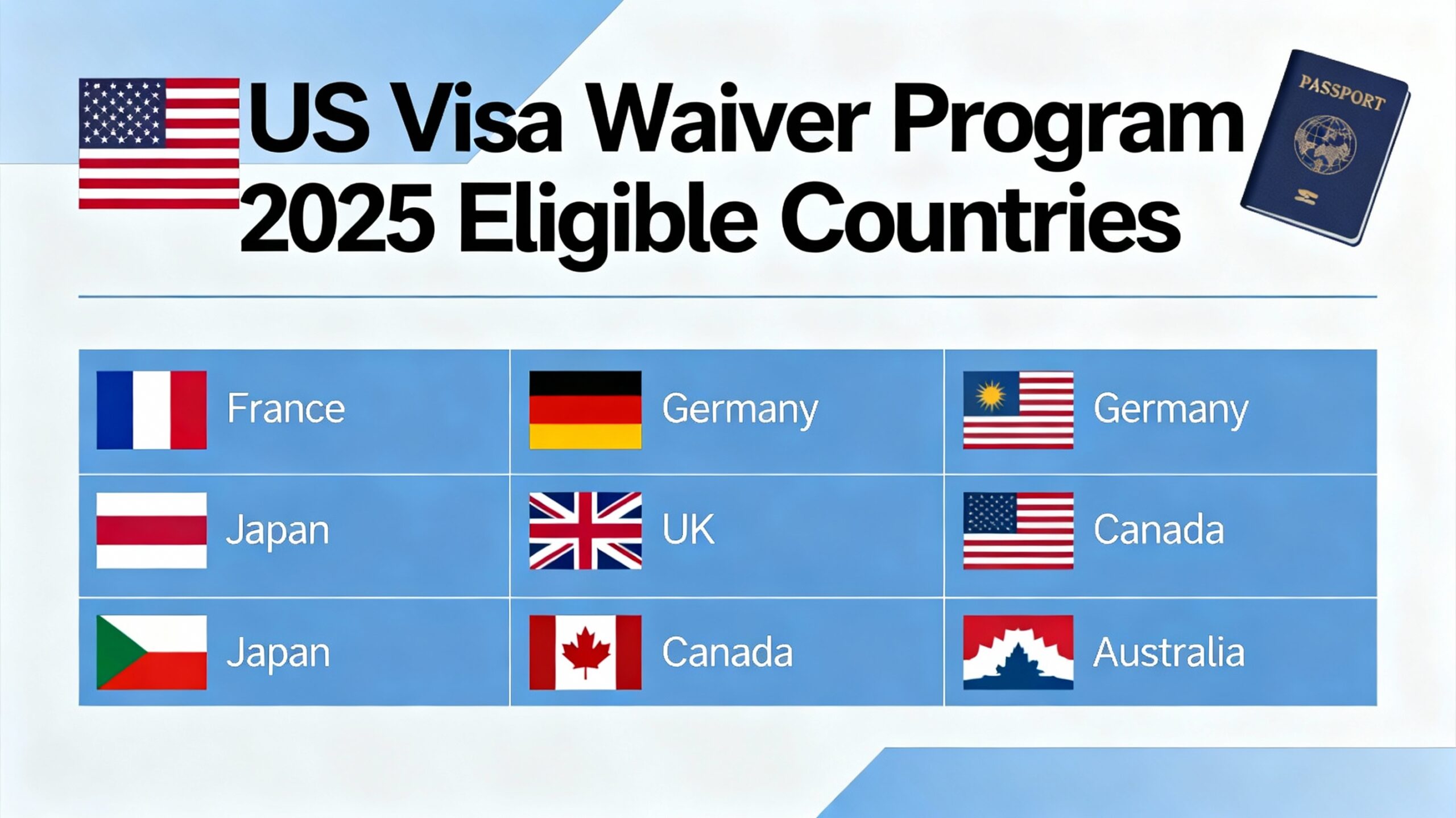
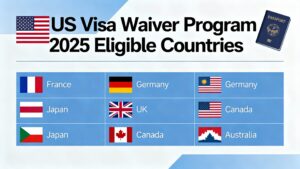
The US Visa Waiver Program (VWP) for 2025 includes 42 eligible countries whose nationals can enter the US for tourism or business for up to 90 days without a visa. The list features major European Union members (excluding Bulgaria and Cyprus), the United Kingdom, Japan, South Korea, Australia, New Zealand, and other nations including Chile, Israel, and Qatar. Romania was added in early 2025, reflecting compliance with program requirements. No new countries from the Americas were added in 2025. Travellers must have authorised electronic travel approval (ESTA) to use the program.
Europe: Andorra, Austria, Belgium, Czech Republic, Denmark, Estonia, Finland, France, Germany, Greece, Hungary, Iceland, Ireland, Italy, Latvia, Liechtenstein, Lithuania, Luxembourg, Malta, Monaco, Netherlands, Norway, Poland, Portugal, San Marino, Slovakia, Slovenia, Spain, Sweden, Switzerland, United Kingdom, and recently Romania.
Asia-Pacific: Australia, Brunei, Japan, New Zealand, Singapore, South Korea, Taiwan.
Americas & Middle East: Chile, Israel, Qatar.
Important Conditions for VWP Entry
Travellers must have a passport from a designated VWP country.
Approval through the Electronic System for Travel Authorisation (ESTA) is required before travel.
Visits are limited to tourism, business, or transit purposes.
Applicants must not have certain travel or dual nationality restrictions related to specific prohibited countries.
This updated list ensures smooth travel for eligible nationals while maintaining security and reciprocal agreements with participating countries.
Which countries were added to the VWP in 2025
In 2025, Romania was the only country added to the US Visa Waiver Program (VWP). No other countries were newly included in the program that year. Romania’s addition reflects its fulfilment of the program’s strict security and policy requirements to qualify for visa-free travel to the US under the VWP.
Exclusions and recent policy changes 2025:
The US Visa Waiver Program (VWP) in 2025 has key exclusions and recent policy changes to note:
Exclusions: Individuals who have traveled to or hold dual nationality in certain countries—specifically Iran, Iraq, Libya, North Korea, Somalia, Sudan, Syria, Yemen (travel after March 1, 2011), and Cuba (travel after January 12, 2021)—are not eligible for the VWP. Some exemptions apply for diplomatic, military, humanitarian, or legitimate business reasons. Additionally, Indian nationals remain excluded due to factors like reciprocity and immigration policies. Citizens from 19 countries face travel restrictions and visa bans which also affect eligibility.
Policy Changes 2025: Starting September 2, 2025, the US Department of State rolled back the visa interview waiver policy, requiring almost all nonimmigrant visa applicants—regardless of age—to attend in-person interviews. This includes categories that were previously exempted such as children under 14 and adults over 79. Only a narrow group of applicants will retain interview waivers, potentially causing longer visa processing times and travel delays. This change affects the broader visa process but intersects with VWP travel rules indirectly in terms of increased scrutiny and interview requirements for eligible travellers.
Security and Compliance: Countries maintain their VWP status by meeting strict US requirements on passport security, visa refusal rates, data-sharing, and terrorism prevention. Travellers must have an approved ESTA and an e-passport embedded with biometric data. The maximum stay under the VWP remains 90 days for business, tourism, or transit purposes. Overstays and previous violations can disqualify travellers.
These exclusions and updates reflect ongoing US security priorities while facilitating visa-free travel for compliant countries under updated protocols.
How do 2025 interview waiver changes affect visa processing times?
The 2025 changes to the US visa interview waiver policy, which require nearly all nonimmigrant visa applicants to attend in-person interviews regardless of age, are expected to increase visa processing times. With more applicants needing interviews, consular offices face higher workloads, leading to longer appointment wait times and potential delays in visa issuance. This intensified scrutiny and additional procedural step add complexity and may slow down the overall visa approval process compared to previous years when certain age groups were exempt from interviews. Consequently, travellers should anticipate longer lead times when applying for US visas in 2025 and plan accordingly.
India’s economy expanded at 8.2 percent in the July-September quarter, the fastest pace in six quarters, as manufacturing and services sectors powered growth despite facing steep U.S. tariffs. The National Statistics Office data released Friday exceeded most economist forecasts of around 7.3 percent, marking the second consecutive quarter of stronger-than-expected performance.
The growth, up from 7.8 percent in the previous quarter and 5.6 percent a year earlier, helped India maintain its position as the world’s fastest-growing major economy. Prime Minister Narendra Modi called the numbers “very encouraging,” crediting pro-growth policies and reforms, while Chief Economic Adviser V. Anantha Nageswaran said full-year growth would reach at least 7 percent, surpassing earlier projections of 6.3 to 6.8 percent.
Manufacturing and Consumption Drive Expansion
Manufacturing output surged 9.1 percent, a sharp rebound from 2.2 percent growth in the same quarter last year, while the services sector grew 9.2 percent, led by a 10.2 percent expansion in financial, real estate and professional services. Private consumption, which accounts for roughly 57 percent of GDP, rose 7.9 percent, boosted by GST rate cuts that took effect September 22.
The government consolidated GST rates from four slabs to two—5 percent and 18 percent—making everyday items cheaper and spurring discretionary spending. Factories ramped up production ahead of the festive season to meet anticipated demand from the tax reductions.
Growth Withstands U.S. Tariff Impact
The strong performance came despite the United States imposing 50 percent tariffs on most Indian exports beginning August 27, among the steepest measures under the Trump administration. The tariffs, linked to India’s energy trade with Russia, affected nearly $12.5 billion worth of exports.
Nageswaran said the economy would cross the $4 trillion mark this fiscal year, up from $3.9 trillion in March 2025. The State Bank of India raised its full-year forecast to 7.6 percent, while analysts from ICRA projected 7.4 percent growth.
Attention now turns to the Reserve Bank of India’s monetary policy meeting December 3-5, with economists widely expecting a 25 basis point rate cut as inflation fell to a record low 0.25 percent in October.
Project Firewall is a U.S. Department of Labor (DOL) enforcement initiative launched on September 19, 2025, to combat H-1B visa abuses by ensuring employers prioritise qualified American workers and comply with program rules. It targets fraud such as wage underpayment, displacement of U.S. workers, fraudulent labor condition applications, and misrepresentation of job duties or worksites. While coordinated with USCIS and other agencies like the DOJ and EEOC, the project originates from DOL, not USCIS directly.
Key Features
Secretary-Certified Investigations: DOL Secretary personally approves probes based on reasonable cause, a new mechanism to accelerate enforcement.
Interagency Collaboration: DOL shares data with USCIS, DOJ, EEOC, and others to address discrimination and fraud holistically.
Triggers: Initiated via complaints, audits, or suspicions of violations like underpaying H-1B workers or laying off Americans to hire visa holders.
Penalties and Impact
Violators face back wage recovery, civil fines, and temporary bans from H-1B sponsorship. By November 2025, it led to at least 175 investigations amid H-1B debates. Employers should maintain accurate LCAs, pay prevailing wages, document job details, and avoid U.S. worker displacement to comply. This aligns with the Trump administration’s “America First” policies, including a $100,000 fee on new H-1B petitions.
How will Project Firewall affect current H-1B employees in the US
Direct Impact on Current H-1B Employees
Project Firewall primarily targets employers for H-1B abuses like underpayment, benching without pay, and wage discrepancies, which could lead to back wages owed directly to affected H-1B workers if violations are found. Current employees in compliant roles face no direct visa revocation or deportation risks, as the initiative enforces labor rules rather than altering visa status. However, if employer audits uncover issues, workers might experience payment delays during investigations or benefit from recovered owed wages.
Indirect Effects on Job Stability
Stricter employer compliance may heighten scrutiny on renewals, job changes, or extensions, creating uncertainty for existing H-1B holders amid fears of penalties. Companies could limit H-1B sponsorships or delay transfers due to debarment risks (1-3 years for violations), potentially reducing internal mobility or new opportunities for current workers. Indian professionals, the largest H-1B group, may see employers prioritize U.S. hires, indirectly pressuring H-1B staff to prove unique value or face slower career progression.
Employer Compliance Requirements
Firms must now rigorously document prevailing wages, public access files, worksite notices, and good-faith U.S. worker recruitment to avoid fines ($2,500-$25,000 per violation) or bans. Non-compliant employers risk multi-agency probes (DOL, USCIS, DOJ, EEOC), which could disrupt payroll or operations, indirectly affecting H-1B employees through layoffs or hiring freezes if U.S. workers are prioritized. Workers should verify their LCA compliance and maintain records to support potential DOL claims for back pay.
Steps H-1B employees should take if their employer is investigated
Immediate Actions
Notify your employer immediately upon learning of the investigation to understand its scope and cooperate if requested, as retaliation for participation is illegal under H-1B protections. Gather and secure personal records including pay stubs, Labor Condition Applications (LCAs), employment contracts, timesheets, and communications about wages or worksites to verify compliance or identify potential violations like underpayment or benching. Avoid signing any statements without review, and do not discuss details with coworkers to prevent misinformation.
Legal and DOL Protections
Contact the DOL Wage and Hour Division (WHD) confidentially via Form WH-4 if you suspect unpaid wages, benching without pay, or other abuses—investigations often result in back pay awards to workers without risking your visa status. Consult an immigration attorney experienced in H-1B matters to assess your rights, as DOL probes focus on employers and protect workers from retaliation or discrimination for cooperating. H-1B status remains valid during compliant employment, even under investigation, unless fraud directly involving the worker is proven.
Job Security Steps
Monitor your Public Access File (PAF) and ensure your employer provides required notices; request copies if needed for your records. Prepare for potential disruptions by updating your resume, networking for transfers (via H-1B portability), and confirming timely wage payments to avoid grace period issues post-termination. If laid off, notify USCIS within 10 days and utilize the 60-day grace period to find new sponsorship without status loss.
How to document workplace hours and duties as an H-1B employee
Tracking Work Hours
Maintain personal timesheets or logs recording daily start/end times, breaks, overtime, and total hours weekly, using digital tools like Excel, Google Sheets, or apps (e.g., Toggl or Clockify) for timestamps and signatures if possible. Cross-reference with employer payroll stubs, which must show actual wages paid matching the LCA’s required rate for all hours worked, including non-productive periods unless bona fide termination occurs. Retain these for at least 3 years, as DOL requires proof during audits to verify full-time status (typically 35-40 hours/week) and prevent benching violations.
Documenting Job Duties
Keep detailed weekly journals noting specific tasks performed, projects, tools used, meetings attended, and how they align with your H-1B petition’s job description (e.g., “Developed Python algorithms for data analysis, 20 hours”). Collect supporting evidence like emails, code commits, performance reviews, supervisor notes, or work outputs (screenshots, reports) timestamped to confirm duties match the LCA. Note any changes in duties, worksite, or remote setup, photographing posted LCA notices at physical locations for records.
Organization and Best Practices
Store all documents securely in a personal digital folder (e.g., Google Drive) with dates, categorized by type: hours, duties, pay, LCA copies, and PAF summaries requested from HR. Review monthly against your LCA for discrepancies like underpayment or duty mismatches, and share summaries with an immigration attorney annually. During investigations, provide these proactively to DOL if filing a WH-4 complaint, protecting against retaliation while aiding back wage recovery.
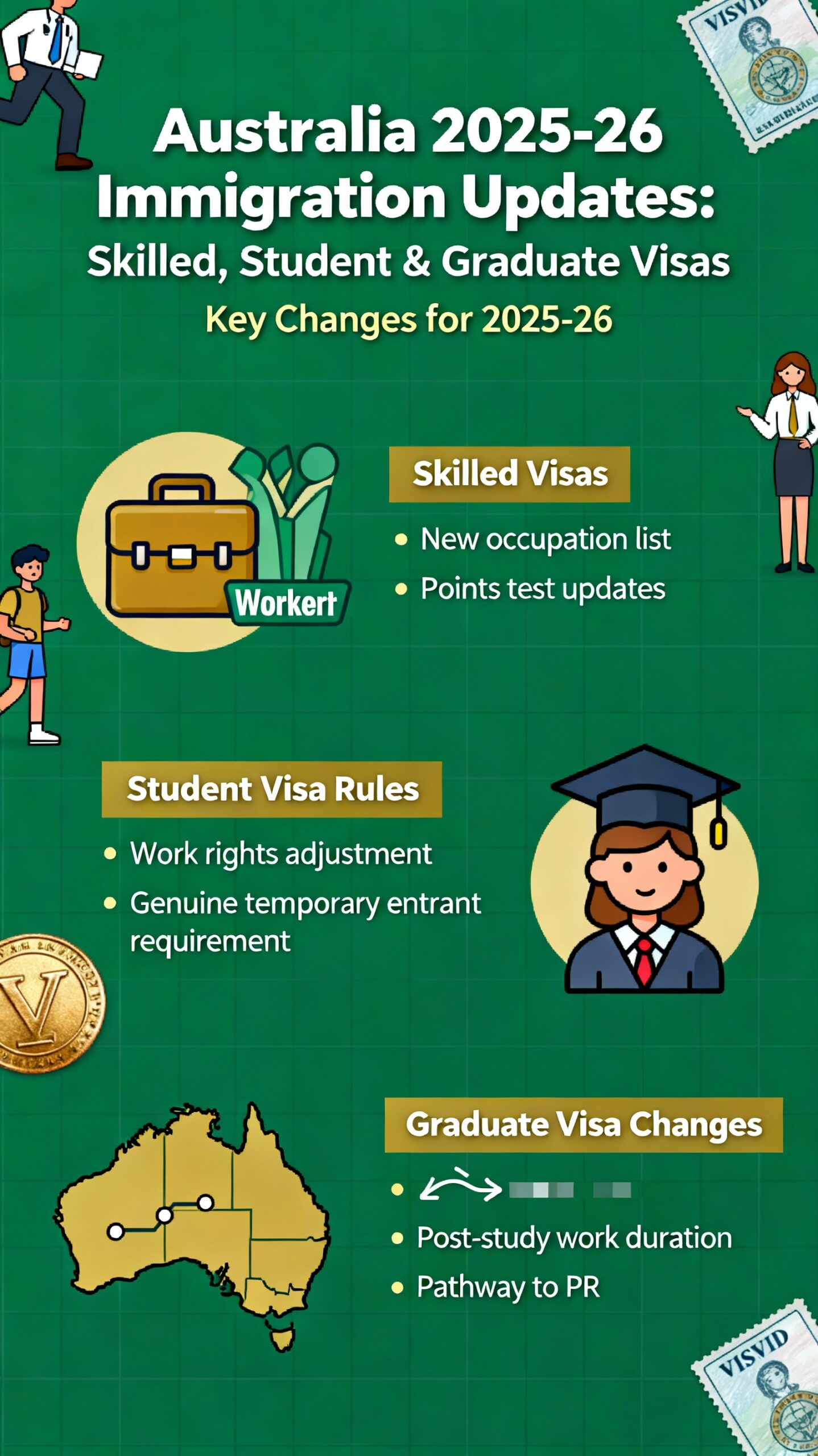
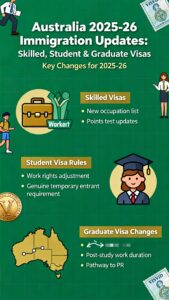
Australia’s latest immigration news focuses on skilled migration allocations for 2025–26, stricter but expanded student pathways, updates to temporary graduate visas, and new processes for some working holiday visas. Policies are being adjusted to keep the permanent intake stable while prioritising skilled workers and tightening some temporary pathways.
Overall migration program 2025–26
The federal government has kept the permanent Migration Program cap at 185,000 places for 2025–26, continuing the same level as 2024–25.
Most places remain in the Skilled stream (over 70% of the total), reflecting a strong focus on addressing labour shortages and attracting qualified workers.
Skilled visas and state allocations
For 2025–26, the government has set total state and territory nomination allocations at 20,350 places across the 190 (Skilled Nominated) and 491 (Skilled Work Regional) visas.
A November 2025 update confirmed an invitation round for the Skilled Independent 189 visa and finalised allocations for states such as NSW and ACT, while states like South Australia and Tasmania have announced their own program openings and available places.
Key skilled migration settings (snapshot)
Item / Visa type
Latest position (2025–26)
Source
Total permanent migration intake
185,000 places, unchanged from 2024–25
Official Australian Immigration Website
State/territory nominated places (190 + 491)
20,350 places total for 2025–26
Official Website
Skills in Demand (SID) visa
Fully implemented after replacing the Temporary Skill Shortage (TSS) visa, with three skills/salary-based streams and clearer PR pathways
Australia Immigration
Student visas and Indian students
Australia has raised its national planning level for new international student intakes to about 295,000 by 2026, while simultaneously tightening controls on quality and intent.
For 2025, key changes for students (including Indian students) include a stricter Genuine Student test, higher English requirements, and higher financial proof thresholds, plus higher student visa application fees from July 2025.
Temporary Graduate (485) and post-study work
Temporary Graduate (subclass 485) visa settings now link stay duration more directly to qualification level (for example, about 2 years for most bachelor’s and coursework master’s, 3 years for research master’s and PhD; around 18 months for many diplomas/trades).
Extended post-study work rights that previously allowed some graduates four to six years of stay have been removed, and from July 2025 application fees and eligibility rules (including English and course requirements) are stricter.
Working Holiday / other updates
A new ballot-style pre‑application system has just been introduced for high-demand Work and Holiday (subclass 462) countries so places can be allocated more fairly when demand exceeds caps.
There are also July 2025 changes across multiple visa subclasses, including higher application charges and updated income thresholds for certain skilled visas, in line with the broader Migration Strategy.
If you tell your target pathway (student, 485, skilled PR, etc.), a more specific checklist and timeline can be suggested.
The Duolingo English Test (DET) is an online, computer-adaptive English proficiency test designed to evaluate reading, writing, speaking, and listening skills. It is convenient, affordable, and provides results in about 2 days. The test lasts about 60 minutes and has three parts: a 45-minute adaptive test, a 10-minute writing and speaking sample, and a video interview section. The score ranges from 10 to 160, with scores above 120 indicating proficiency in English.
Adaptive questions that adjust in difficulty based on your answers.
Multiple skills are tested: reading, writing, speaking, and listening.
The writing sample requires writing on a given topic within 5 minutes (minimum 50 words).
The speaking sample includes answering open-ended questions.
The video interview allows test-takers to respond to open questions.
The DET is increasingly accepted by universities worldwide and can be taken anytime online without appointments. It is seen as an accessible alternative to traditional tests like TOEFL or IELTS, especially since it allows flexible scheduling and rapid results. Preparation involves getting familiar with the test format, practicing vocabulary, time management, and speaking skills.
This test is officially endorsed by several universities and is also accepted for student visa purposes in some countries like Ireland. However, some prestigious universities such as Oxford, Cambridge, and Lancaster currently do not accept the DET.
For preparation, it is recommended to:
Understand the test format well.
Improve vocabulary through reading and listening practices.
Practice with mock tests to improve accuracy and speed.
Do writing and speaking exercises on common topics.
Use free and paid practice resources available online.
Test Format
The DET lasts 60 minutes and includes an adaptive section (45 minutes) that adjusts question difficulty, a 10-minute writing/speaking sample, and a video interview. It features varied tasks like fill-in-the-blanks, real-world conversations, describe-image prompts, interactive reading, writing samples (50+ words in 5 minutes), and open speaking responses. No fixed syllabus exists; it mirrors everyday and academic English usage.
Scoring and Equivalents
Scores report overall proficiency plus subscores in literacy, comprehension, conversation, and production, mapped to CEFR levels (e.g., 120 = B2). The table below compares DET to TOEFL iBT and IELTS:
TOEFL iBT (0-120)
IELTS (0-9)
DET (10-160)
CEFR
120
8.5-9
160
C2
113-116
7.5
145
C1
93-97
6.5
125
B2
59-64
5.5
95
B1
1-16
1-3.5
10-50
A1-A2
Adaptive Test
This core graded section features 20-40 questions across multiple types, dynamically increasing or decreasing in difficulty. Common question types include:
Question Type
Skills Tested
Response Time
Description
Read and Select
Literacy, Comprehension
1 min
Identify real English words from nonsense.
Read and Complete
Literacy, Comprehension
3 min
Fill missing letters in sentences.
Fill in the Blanks
Vocabulary, Spelling
Varies
Complete gaps in text.
Listen and Type
Comprehension, Listening
1 min
Type what you hear.
Read Aloud
Fluency, Pronunciation
20 sec
Speak a written sentence.
Write About the Photo
Literacy, Production
1 min
Describe an image in writing.
Speak About the Photo
Conversation, Production
1-1.5 min
Describe an image verbally.
Read, Then Speak
Fluency, Conversation
1.5 min
Read prompt, then speak on topic.
Listen, Then Speak
Conversation, Listening
1.5 min
Listen to audio, then respond.
Complete Sentences
Literacy, Comprehension
7-8 min
Choose words to fit context.
Highlight Answer
Comprehension
7-8 min
Select text answering a question.
Writing and Speaking Sample
These ungraded tasks provide samples for institutions: Write 50+ words (min 3 min, max 5 min) on a topic for literacy/production, and speak (1-3 min) on open-ended prompts or video interview for conversation skills.
Acceptance and Logistics
Over 5,000 institutions worldwide accept DET, including many in the US, UK (e.g., Imperial College London), and Ireland for student visas; Oxford, Cambridge, and Lancaster do not. Take it anytime from a quiet space with a computer (camera/mic required), costing $59, with unlimited retakes (certified results valid 2 years).
Preparation Tips
Practice adaptive questions, vocabulary, and timed speaking/writing via official mocks and apps; focus on fluency over perfection given your Duolingo familiarity and English test research (PTE/TOEFL/IELTS). Free resources include Duolingo’s practice test; aim for consistent daily sessions matching your content creation routine.
Also, Duolingo is a free, gamified language-learning app founded in 2011 by Luis von Ahn and Severin Hacker, designed to make education accessible worldwide through interactive lessons, streaks, and its mascot Duo the owl. It launched publicly in 2012 after a beta phase and expanded via mobile apps in 2013, reaching millions by incorporating adaptive algorithms for personalised learning.
Duolingo serves as a leading gamified platform for language learning, offering free access to interactive lessons in over 40 languages for English speakers, with expansions into subjects like Chess.
Key Features
Bite-sized lessons cover vocabulary, grammar, speaking, and listening with instant feedback, adaptive algorithms, and gamification like streaks, XP, leaderboards, and badges.
Stories, podcasts, and mini-games build conversational skills and cultural insights; voice recognition aids pronunciation practice.
Recent additions include Energy system (replacing hearts for rewarding consistency) and AI tools like Video Call, Role play, and Explain My Answer in Max tier.
Languages and Courses
English speakers access 40 courses, including top ones like Spanish (48.8M learners), French (27.2M), Japanese (24.4M), German (18.9M), and Korean (17.8M), plus niche options like High Valyrian and Klingon. Courses from other base languages expand to over 40 total, with ongoing additions like a 2025 Chess course and CEFR B2 expansions for French and Spanish. Stories and AI-supported paths are available in select languages like German, Italian, Portuguese, and Japanese.
Pricing Plans
Plan
Monthly Price
Annual Price
Key Benefits
Free
$0
$0
Basic access with ads, limited hearts/energy
Super
$12.99
$59.99-$84
Ad-free, unlimited attempts, offline lessons
Super Family
N/A
$119.99
Up to 6 accounts, all Super perks
Max
Varies
Varies
AI tools like Roleplay, Video Call
A freemium model supports free core access while subscriptions fund operations.
Effectiveness and Updates
Independent studies show learners gain about 8.1 points per study hour on language tests, equivalent to a college semester in 34 hours on average for Spanish beginners. Recent 2025 research confirms high accuracy in conversations after 4-6 weeks and teacher endorsements for efficiency. As of Q2 2025, Duolingo reported 40% daily active user growth, driven by AI and new non-language courses. For English proficiency goals like PTE or TOEFL prep, it supplements basics effectively but pairs best with focused practice.
Recent Major Changes and Updates to Duolingo 2024 2025
Recent major changes and updates to Duolingo in 2024 and 2025 include the following:
Duolingo has introduced new AI-powered features that allow learners to practice real-life conversation and receive personalized grammar explanations. Over 90% of users who tried these AI tools for a month reported feeling prepared to use their new language in real situations. More than 60% said they applied what they learned outside the app, such as asking for directions or ordering food while traveling. These AI features enhance learning confidence significantly.
The course design was revamped in 2022 with the introduction of the “path” system, leading to improved learning outcomes such as higher reading and listening scores compared to the previous design. This new system is still being enhanced through ongoing research.
Duolingo’s efficacy studies consistently show that learning through the platform is as effective as traditional classroom learning. Learners achieve significant improvement across all language skills—reading, writing, speaking, and listening—in much less time than expected in formal education settings. This is validated by independent studies and endorsements from teachers.
User engagement features have evolved, replacing the earlier “hearts” system with an “Energy” model to encourage persistence without harsh penalties for mistakes. Gamification strategies and streaks continue to motivate learners, complemented by expansions in course offerings including non-language courses like Chess introduced in 2025.
These updates reflect Duolingo’s continual commitment to leveraging AI and research-backed pedagogy to enhance language acquisition efficiency and learner experience.
A Comprehensive Guide to Using Duolingo Effectively
Duolingo excels as a gamified tool for building language foundations through daily habits, best used with 15-30 minute sessions for consistent progress toward proficiency goals like PTE or TOEFL basics.
Getting Started
Download the app or visit duolingo.com, select your base language (e.g., English) and target language from 40+ options like Spanish or Japanese, then take the placement test for personalized starting level. Set daily goals (10-20 XP initially) and enable reminders; complete the onboarding tree or path to unlock core skills like basics and greetings.
Daily Practice Routine
Follow the Path: Tackle 1-3 lessons per day in sequence, focusing on weak units via practice mode; aim for 5-day streaks to build momentum.
Mix Skills: Alternate grammar, vocab, speaking (use microphone), and listening; review stories for context after 1-2 units.
Earn XP Efficiently: Complete quests, leaderboards, and events; use gems for bonus lessons without Super.
Maximising Features
Upgrade to Super for unlimited energy (replacing hearts), ad-free access, and offline mode if budget allows, especially for travel prep. Leverage AI in Max for Roleplay and Video Call to simulate conversations, ideal for real-world confidence before exams. Track progress with proficiency levels (A1-C2 CEFR-aligned) and certificates shareable for applications.
Advanced Strategies
Tip
Benefit
Pro Tip
Legendary Lessons
Master units permanently
Retry after full path completion
Podcasts/Stories
Cultural immersion
Listen during commutes for CBSE-style audio practice
Club/Forums
Accountability and tips
Join for motivation, share PTE progress
Supplement Tools
Deeper grammar/speaking
Pair with Anki flashcards or YouTube vids
Combine with focused exam drills (e.g., PTE Speaking) after 3 months for 20-30% vocab gains. Test weekly via Duolingo’s practice hub to adjust pace.