Category Archives: Tenses

PRESENT CONTINUOUS TENSE

WHAT IS PRESENT CONTINUOUS TENSE

WHAT IS PRESENT CONTINUOUS TENSE

WHAT IS PRESENT CONTINUOUS TENSE

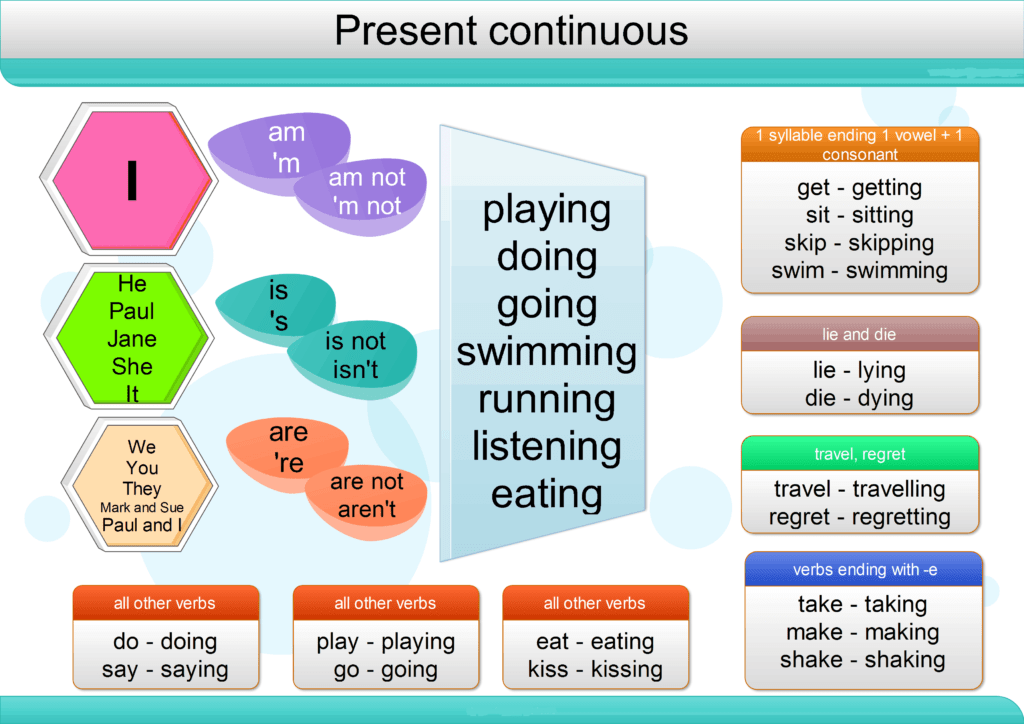
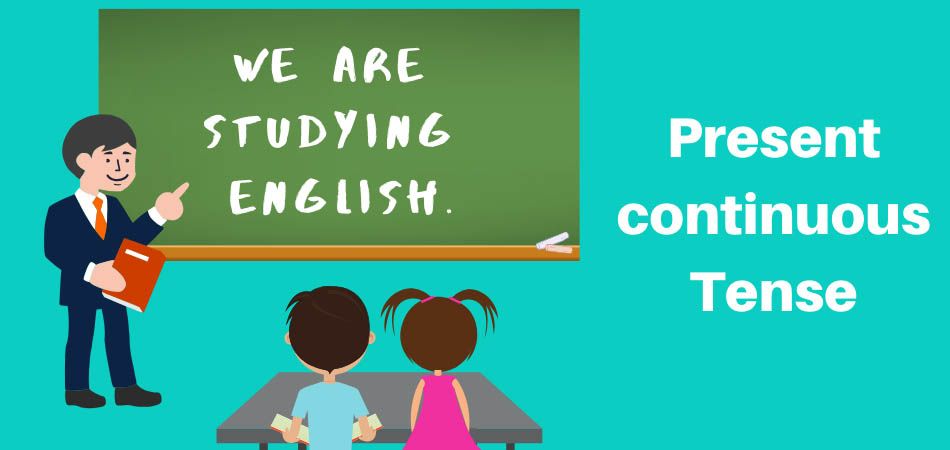
The present continuous verb tense indicates that an action or condition is happening now, frequently, and may continue into the future.

Present Continuous Tense के वाक्यो के अन्त मे हिन्दी मे “रहा है”, “रहे है”, “रही है” “रहे हो” आता है ।

Structure of Sentence

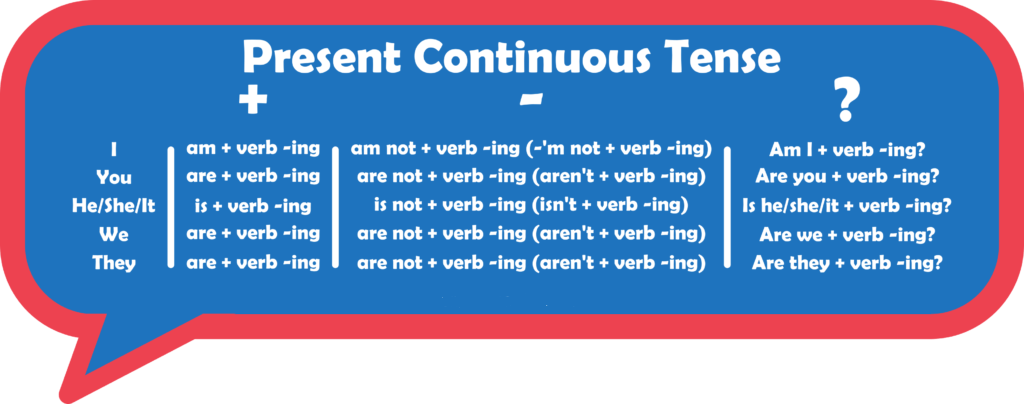
Subject + is/am/are + First Form Of Verb + ing + Object

With He/She/It/Singular Noun need to use “is” along with First Form of Verb and “ing”.

With “I” need to use “am” along with First Form of Verb and “ing”.

With We/You/They/Plural noun need to use “are” along with First Form of Verb and “ing”.

PRESENT CONTINUOUS TENSE – Examples

  • मै खाना खा रहा हूं।
  • I am eating food.
  • हम खेल रहे है।
  • We are playing.
  • चूहे दौड रहे है।
  • Rats are running.

Present Continuous Tense – Negative Sentence

The present continuous (or progressive) is the tense used to express situations that are happening now (before, during and after the moment of speaking). When expressed in its negative form, the verb denies that something is happening now.

Structure of Sentence

Subject + is/am/are + not + First Form Of Verb + ing + Object

With He/She/It/Singular Noun need to use “is” along with First Form of Verb and “ing”.

With “I” need to use “am” along with First Form of Verb and “ing”.

With We/You/They/Plural noun need to use “are” along with First Form of Verb and “ing”.

Examples

  • बच्चे सो नही रहे है।
  • Children are not sleeping.
  • हम स्नान नही कर रहे है।
  • We are not bathing.
  • मै आज स्कूल नही जा रहा हूं।
  • I am not going to school today.

Present Continuous Tense – Interrogative Sentence

The present continuous (or progressive) is the tense used to express situations that are happening now (before, during and after the moment of speaking). When expressed in its interrogative form, it is used to form questions about something that is happening now.

Structure of Sentence

Is/am/are + subject + First Form Of Verb + ing + Object + ?

With He/She/It/Singular Noun need to use “is” along with First Form of Verb and “ing”.

With “I” need to use “am” along with First Form of Verb and “ing”.

With We/You/They/Plural noun need to use “are” along with First Form of Verb and “ing”.

Examples

  • क्या मै हँस रहा हूं?
  • Am I laughing?
  • क्या हम बाजार जा रहे है?
  • Are we going to market?
  • क्या वह विदेश जा रहा है?
  • Is he going to a foreign country?

Present Continuous Tense – Interrogative Negative Sentence

The present continuous (or progressive) is the tense used to express situations that are happening now (before, during and after the moment of speaking). When expressed in its interrogative form, it is used to form questions about something that is not happening now.

Structure of Sentence

Is/am/are + subject + not + First Form Of Verb + ing + Object + ?

With He/She/It/Singular Noun need to use “is” along with First Form of Verb and “ing”.

With “I” need to use “am” along with First Form of Verb and “ing”.

With We/You/They/Plural noun need to use “are” along with First Form of Verb and “ing”.

Examples

  • क्या वे जन्म दिन नही रहे है?
  • Are they not celebrating their birthday?
  • क्या बच्चे फूल नही रहे है?
  • Are children not plucking flowers?
  • क्या वह कपडे नही घो रही है?
  • Is she not washing clothes?

Present Continuous Tense (Passive Form)

The structure for the present continuous passive is: subject + is/are + BEING + the past participle. Note that the person who is fixing the car is not mentioned in the sentence “My car is being fixed.” Leaving out the person or thing doing the action is common in passive statements.

Structure Of Sentence

Object + am/is/are + being + the Past Participle form of the verb + by + Subject.

‘am’ is used with I only.

‘is’ is used with he/she/it/singular noun.

‘are’ is used with we/you/they/plural noun.

Examples

  • He is drawing a picture. (Active)
  • A picture is being drawn by him. (Passive)
  • You are writing a letter. (Active)
  • A letter is being written by you. (Passive)
  • I am eating food. (Active)
  • Food is being eaten by me. (Passive)

Like and Subscribe our Youtube Channel Way To Crack IELTS.

Follow our Official Pages on Facebook and Instagram.

What is Present Simple (Indefinite) Tense

WHAT IS PRESENT SIMPLE (INDEFINITE) TENSE

WHAT IS PRESENT SIMPLE (INDEFINITE) TENSE

WHAT IS PRESENT SIMPLE (INDEFINITE) TENSE

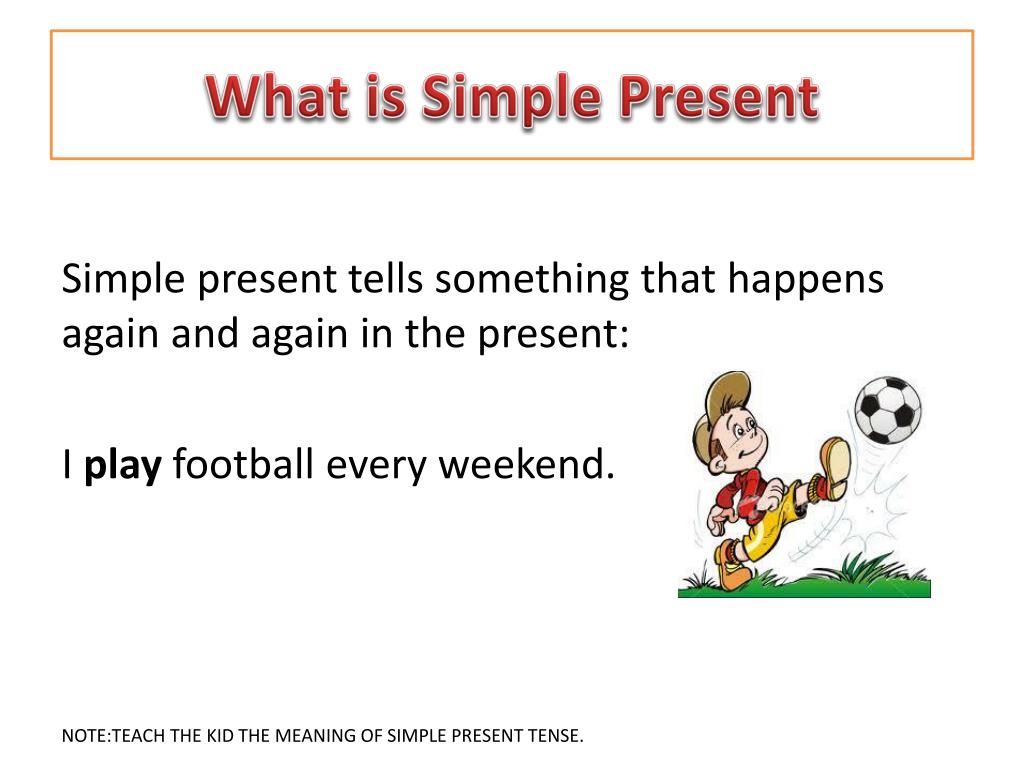
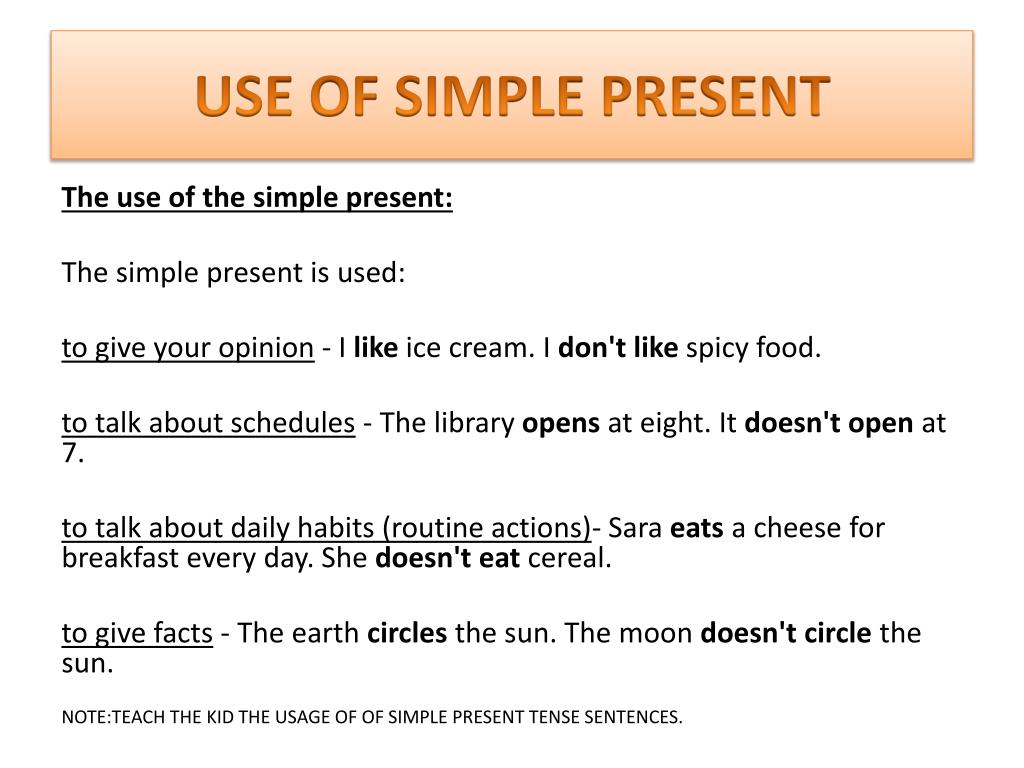
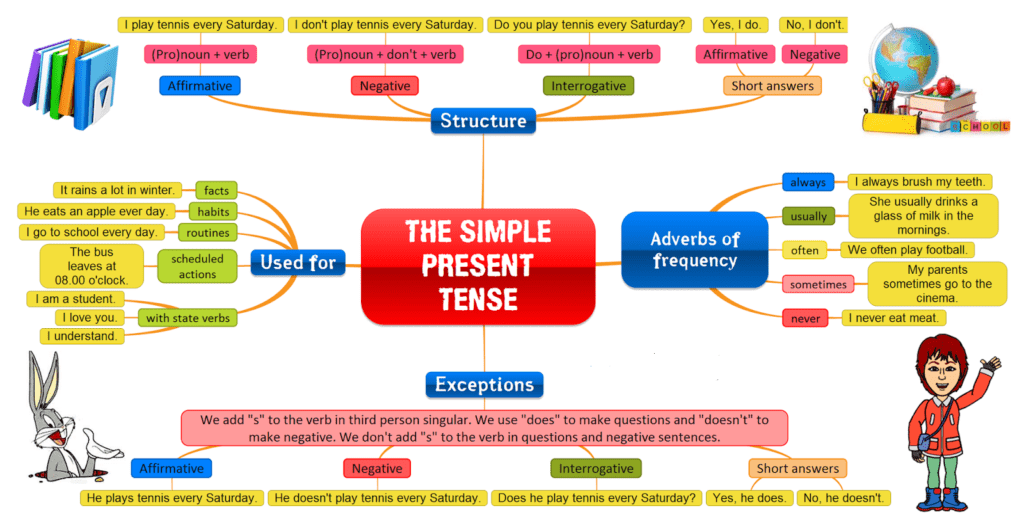
A tense expressing an action that is currently going on or habitually performed, or a state that currently or generally exists is known as Present Simple (Indefinite) Tense.

Use the present tense to talk about something that is going on now or that is true now and any time.

Present Simple Tense के वाक्यो के अन्त मे ता है, ते है, ती है, ता हूं, ते हो आता है ।

Structure of Sentence

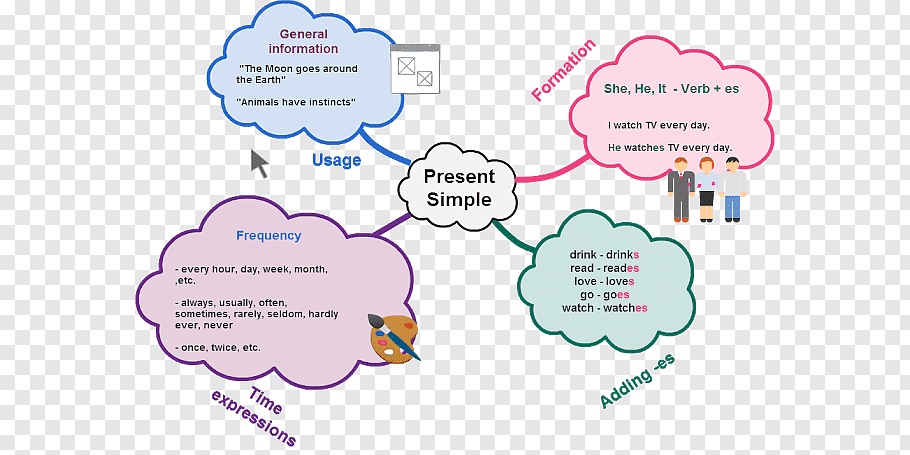
Subject + First Form Of Verb + s/es + Object

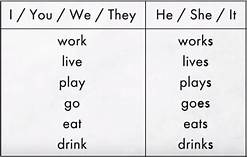
With He/She/It/Singular Noun need to use s/es along with First Form of Verb.

With I/We/You/They/Plural noun need to use only First form of verb.

In this tense, ‘daily’, ‘every day’, ‘always’, ‘sometimes’, ‘rarely’, ‘often’, ‘seldom’, ‘occassionally’ such adverbs are generally used.

PRESENT SIMPLE (INDEFINITE) TENSE – Examples

  • मै प्रतिदिन स्नान करता हूं ।
  • I take bath everyday.
  • हम उसका पता जानते है ।
  • We Know his address.
  • आप नींद मे बोलते हो ।
  • You talk in your sleep.

Present Simple Tense – Negative Sentence

We use the present simple, in its negative form, to deny situations that regularly, repeatedly or always occur. When we use the present simple in its negative form, we start with the subject followed by do not and the verb in its base form. In the third person singular, we use does not.

Structure of Sentence

Subject + do/does + not + First Form Of Verb + Object

With He/She/It/Singular Noun need to use does along with First Form of Verb.

With I/We/You/They/Plural noun need to use do with First form of verb.

Examples :

  • तुम उत्तर नहीं जानते।
  • You do not know the answer.
  • हम तुम पर विश्वास नही करते।
  • We do not believe you.
  • सर्दी मे फूळ नही खिलते।
  • Flowers do not bloom in winter.

Simple Present Tense – Interrogative Sentence

We use the present simple, in its interrogative form, to ask about situations that regularly, repeatedly or always occur. When we use the present simple in its interrogative form, we start with do followed by the subject and the verb in its base form (the sentence ends with a question mark).

Structure of Sentence

Do/Does + Subject + First Form Of Verb + Object + ?

With He/She/It/Singular Noun need to use does along with First Form of Verb.

With I/We/You/They/Plural noun need to use do with First form of verb.

Examples:

  • क्या बालक पानी मे तैरते है?
  • Do boys swim in water?
  • क्या आपको सर्दी लगती है?
  • Do you feel cold?
  • क्या घंटी आठ बजे बजती है?
  • Does the bell ring at 8.00 ?

Simple Present Tense – Interrogative-Negative Sentence

In the Simple Present the negative and interrogative sentences in English are formed using the auxiliary do or does along with ‘not’.

Structure of Sentence

Do/Does + Subject + not + First Form Of Verb + Object + ?

With He/She/It/Singular Noun need to use does along with First Form of Verb.

With I/We/You/They/Plural noun need to use do with First form of verb.

Examples:

  • क्या मै प्रतिदिन दाढी नही बनाता ?
  • Do I not shave everyday?
  • क्या हम भगवान से प्रार्थना नही करते है?
  • Do we not pray to God?
  • क्या वे यहां पर ताजा रस नहीं बेचते?
  • Do they not sell fresh juice here?

Present Simple Tense (Passive Form)

Present Simple Passive is used to talk about some actions that are performed in the present or repeatedly (habits), simple statements of fact or universal truth.

Structure Of Sentence

Object + am/is/are + the Past Participle form of the verb + by + Subject

‘am’ is used with I only.

‘is’ is used with he/she/it/singular noun.

‘are’ is used with we/you/they/plural noun.

Examples :

  • Shweta plays chess. (Active)
  • Chess is played by Shweta. (Passive)
  • We know his address. (Active)
  • His address is known by us. (Passive)
  • I take bath. (Active)
  • Bath is taken by me. (Passive)

Today’s grammar lesson could be beneficial for, how to boost your IELTS score through mastering the present tenses.

Like and Subscribe our Youtube Channel Way To Crack IELTS.