Tag Archives: english tutorials

what is Simple (indefinite) past tense?

What is Simple (Indefinite) Past Tense?

WHAT IS SIMPLE (INDEFINITE) PAST TENSE?


WHAT IS SIMPLE (INDEFINITE) PAST TENSE?

WHAT IS SIMPLE (INDEFINITE) PAST TENSE?

WHAT IS SIMPLE (INDEFINITE) PAST TENSE?

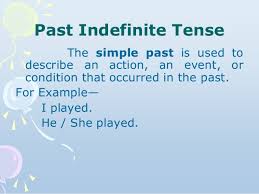
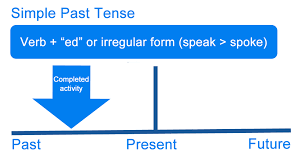
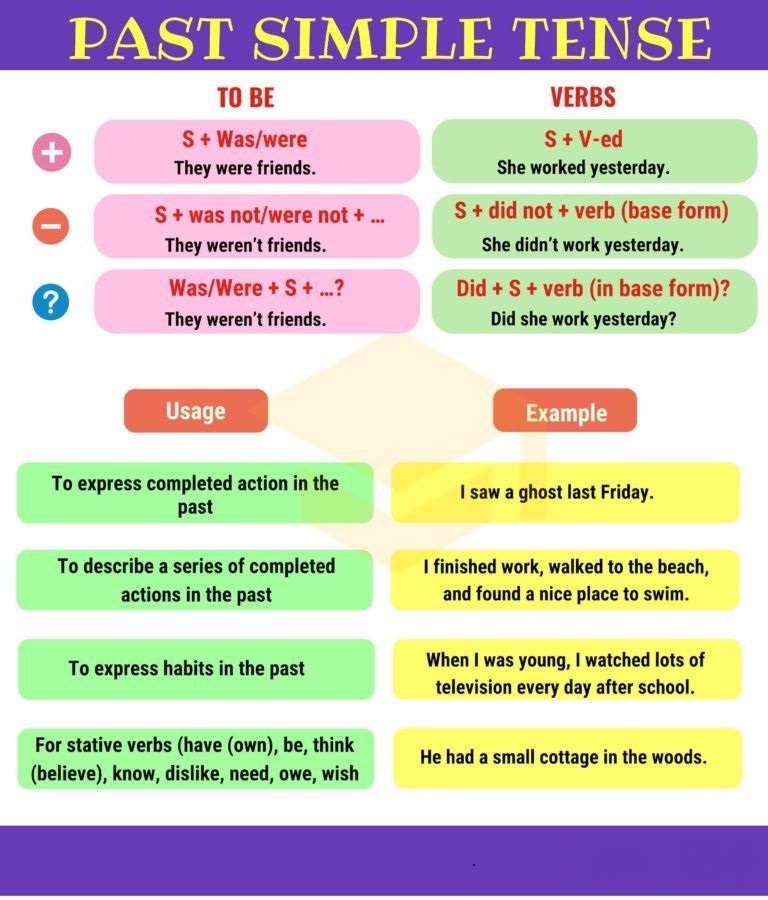
The simple past tense, sometimes called the preterite, is used to talk about a completed action in a time before now. The time of the action can be in the recent past or the distant past and action duration is not important.

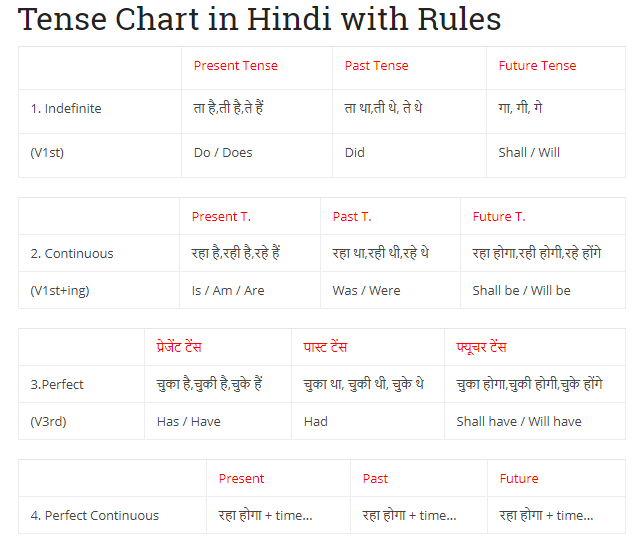
Simple (indefinite) Past Tense के वाक्यो के अन्त मे ता था, ते थे, ती थी, आ, ए, ई आता है ।

Structure of Sentence

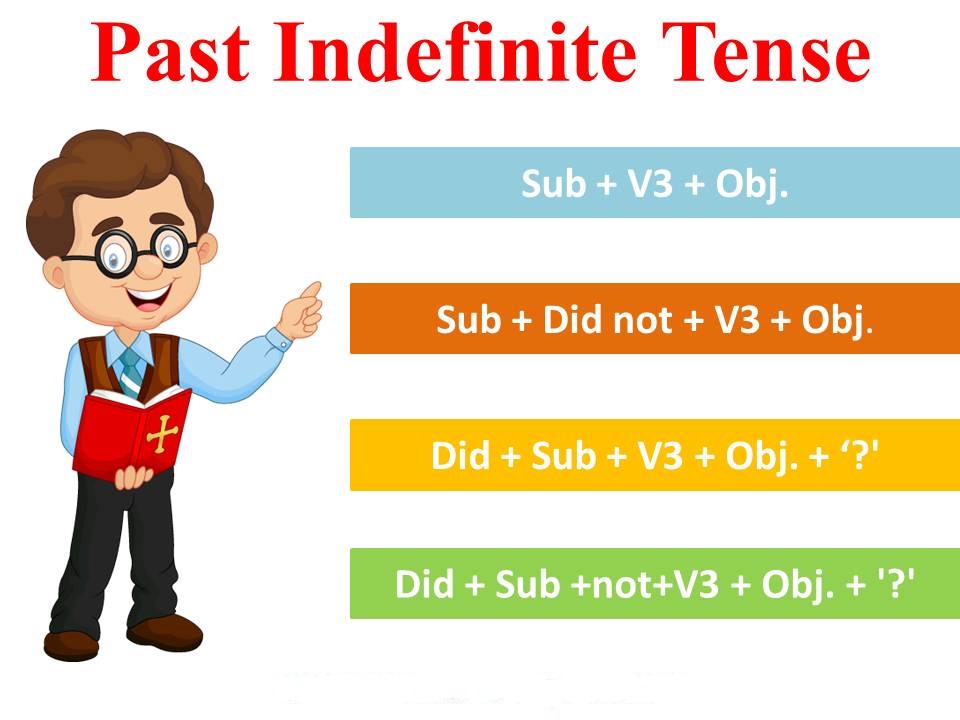
Subject + Second Form Of Verb + Object.

With He/She/It/I/We/You/They/Singular Noun/Plural Noun need to use Second Form of Verb.

Simple (Indefinite) Past Tense – Examples

  • हमने मिठाइयां बांटी।
  • We distributed sweets.
  • हमने प्रदर्शनी देखी।
  • We saw the exhibition.
  • राम ने रावण को मारा।
  • Ram killed Ravana.

Simple (Indefinite) Past Tense – Negative Sentence

To form the negative of a sentence in the Simple Past you need to use the past form of the auxiliary verb ‘do’ – that is ‘did’ + ‘not’ + the infinitive of the verb you want to use.

Structure of Sentence

Subject + did + not + First Form Of Verb + Object.

With He/She/It/I/We/You/They/Singular Noun/Plural Noun need to use ‘Did‘ along with First Form of Verb.

Examples

  • मैने कार नही बेची।
  • I did not sell the car.
  • उसे घडी नही मिली।
  • He did not find the watch.
  • हम अपना रास्ता नही भूले।
  • We did not lose the way.

Simple (Indefinite) Past Tense – Interrogative Sentence

An interrogative sentence asks a direct question and is punctuated at the end with a question mark. It is one of the four basic types of sentences, and it’s a highly useful one. Simple (Indefinite) Past Tense Interrogative sentences we start with did followed by the subject and the verb in its second form.

Structure of Sentence

Did + Subject + First Form Of Verb + Object + ?

With He/She/It/I/We/You/They/Singular Noun/Plural Noun need to use ‘Did‘ along with First Form of Verb.

Examples

  • क्या हम कल स्कूल गए थे।
  • Did we go to school yesterday?
  • क्या सीमा बाजार गई थी?
  • Did seema go to market?
  • क्या आपने लडाई की थी?
  • Did you fight?

Simple (Indefinite) Past Tense – Interrogative Negative Sentence

In the Simple Past the negative and interrogative sentences in English are formed using the auxiliary ‘Did’ along with ‘not’.

Structure of Sentence

Did + Subject + not + First Form Of Verb + Object + ?

With He/She/It/I/We/You/They/Singular Noun/Plural Noun need to use ‘Did‘ along with First Form of Verb.

Examples

  • क्या तुमने झूठ नही बोला था?
  • Did you not tell a lie?
  • क्या मैने नाटक मे भाग नही लिया?
  • Did I not take part in the play?
  • क्या उन्होने लडाई नही की?
  • Did they not fight?

Simple (Indefinite) Past Tense (Passive Form)

The simple past passive expresses discrete, completed, noncontinuous actions or events in the past while moving an object from an active sentence into the subject position.

Structure of Sentence

Object of the active sentence + was/were + past participle form of the verb + by + subject of the active sentence.

Was is used with I/He/She/It/Singular Noun

Were is used with We/You/They/Plural Noun

Examples

  • You ate mangoes. (Active)
  • Mangoes were eaten by you. (Passive)
  • I sang a song. (Active)
  • A song was sung by me. (Passive)
  • My parents did not allow me to swim. (Active)
  • I was not allowed to swim by my parents. (Passive)

Do not forget to Subscribe our YouTube Channel Way To Crack IELTS.

I hope that provided information was helpful and if you like the post. Please leave a comment and if you have any query, you can leave it in the contact us form.

Keep on sharing and keep on supporting us.

Follow our Official Pages on Facebook and Instagram.

Thanks!

Present Perfect Tense

Present Perfect Tense

Present Perfect Tense

Present perfect Tense

Present Perfect Tense

The Present Perfect tense is a rather important tense in English, but it gives speakers of some languages a difficult time. That is because it uses concepts or ideas .

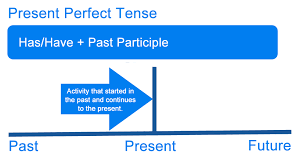
The present perfect is used to indicate a link between the present and the past. The time of the action is before now but not specified, and we are often more interested in the result than in the action itself.

Present Perfect Tense के वाक्यो के अन्त मे हिन्दी मे “चुका है”, “चुके है”, “चुकी है”, “चुके हो”, “आ है”, “ई है”, “ए है” आता है ।

Structure of Sentence

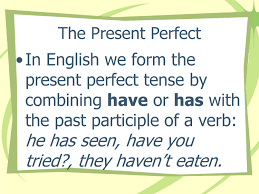
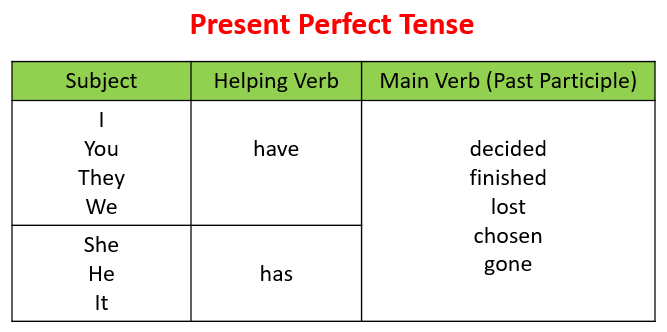
Subject + has/have + Past Participle + Object.

With He/She/It/Singular Noun need to use “has” along with Past Participle.

With I/We/You/They/Plural noun need to use “have” along with Past Participle.

Examples

  • मै भोजन कर चुका हूं।
  • I have eaten food.
  • हम खेल चुके है।
  • We have played.
  • वह सो चुका है।
  • He has slept.

Present Perfect Tense – Negative Sentence

We use the present perfect, in the negative form, to deny completed actions that have occurred in the past, are connected to the present, and still have effects on it. When we use the present perfect in its negative form, we start with the subject, followed by have not and a past participle.

Structure of Sentence

Subject + has/have + not + Past Participle + Object.

Examples

  • मैने यह नाटक नही देखा है।
  • I have not seen this play.
  • उसने नृत्य नही सीखा है।
  • She has not learnt to dance.
  • तुमने कभी शरारत नही की है।
  • You have never made a mischief.

Present Perfect Tense – Interrogative Sentence

We use the present perfect, in the interrogative form, to ask about completed actions which have occurred in the past, are connected to the present and still have effects on it.

Structure of Sentence

Has/have +Subject + Past Participle + Object + ?.

Examples

  • क्या वह स्कूल से आ चुका है?
  • Has he come back from school?
  • क्या माली घास काट चुका है?
  • Has the gardener cut the grass?
  • क्या मै खेल चुका हूं?
  • Have I played?

Present Perfect Tense – Interrogative Negative Sentence

For converting these sentences into negative interrogative sentences the formula is that you add has at the starting of the sentence and ‘not’ after the subject. The rest of the rule remains the same. 

Has/have +Subject + not + Past Participle + Object + ?.

Examples

  • क्या मै खेल नही चुका हूं?
  • Have I not played?
  • क्या हमने उनसे बात नही की है?
  • Have we not spoken to him?
  • क्या वह कुत्ते के काटने से नही मरा है?
  • Has he not died of a dog bite?

Present Perfect Tense (Passive Form)

In the present perfect form with the passive, we always use ‘has/have been’ + the past participle form.

Structure Of Sentence

Object + has/have + been + the Past Participle form of the verb + by + Subject.

Examples

  1. She has cooked food. (Active)
  2. Food has been cooked by her. (Passive)
  3. They have bought a car. (Active)
  4. A car has been bought by them. (Passive)
  5. I have seen the circus. (Active)
  6. The circus has been seen by me. (Passive)

Like and Subscribe our Youtube Channel Way To Crack IELTS.

Follow our Official Pages on Facebook and Instagram.

Get our Latest Post/Blogs here.

WHAT IS PRESENT CONTINUOUS TENSE

WHAT IS PRESENT CONTINUOUS TENSE

WHAT IS PRESENT CONTINUOUS TENSE

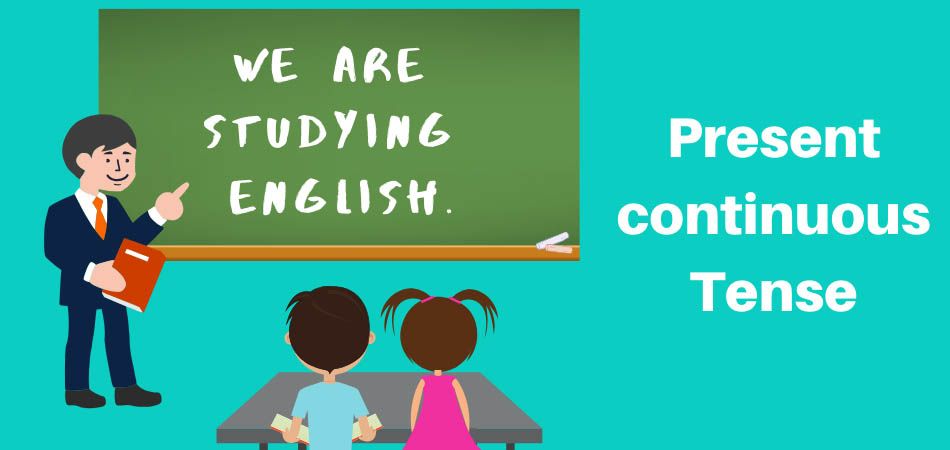
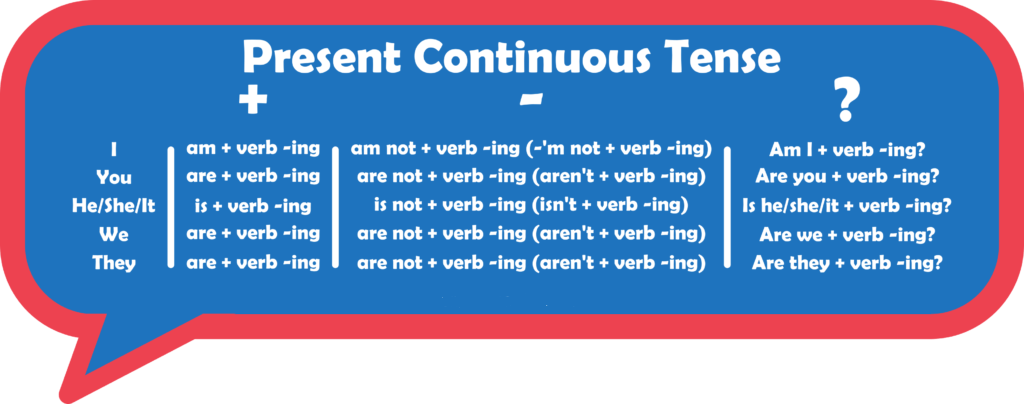
The present continuous verb tense indicates that an action or condition is happening now, frequently, and may continue into the future.

Present Continuous Tense के वाक्यो के अन्त मे हिन्दी मे “रहा है”, “रहे है”, “रही है” “रहे हो” आता है ।

Structure of Sentence

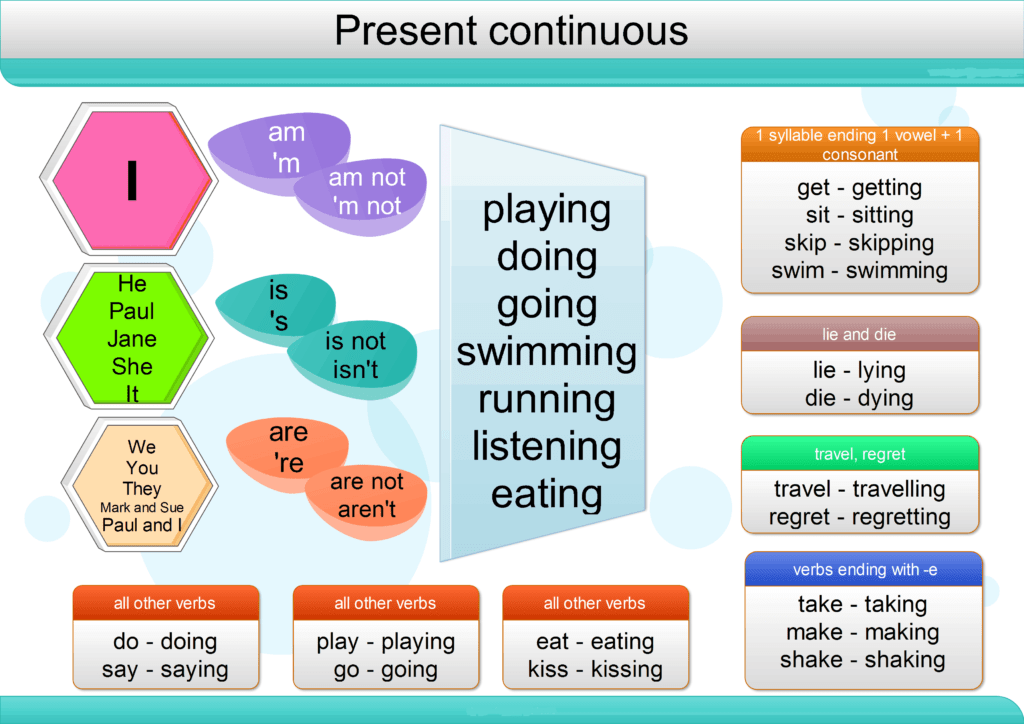
Subject + is/am/are + First Form Of Verb + ing + Object

With He/She/It/Singular Noun need to use “is” along with First Form of Verb and “ing”.

With “I” need to use “am” along with First Form of Verb and “ing”.

With We/You/They/Plural noun need to use “are” along with First Form of Verb and “ing”.

PRESENT CONTINUOUS TENSE – Examples

  • मै खाना खा रहा हूं।
  • I am eating food.
  • हम खेल रहे है।
  • We are playing.
  • चूहे दौड रहे है।
  • Rats are running.

Present Continuous Tense – Negative Sentence

The present continuous (or progressive) is the tense used to express situations that are happening now (before, during and after the moment of speaking). When expressed in its negative form, the verb denies that something is happening now.

Structure of Sentence

Subject + is/am/are + not + First Form Of Verb + ing + Object

With He/She/It/Singular Noun need to use “is” along with First Form of Verb and “ing”.

With “I” need to use “am” along with First Form of Verb and “ing”.

With We/You/They/Plural noun need to use “are” along with First Form of Verb and “ing”.

Examples

  • बच्चे सो नही रहे है।
  • Children are not sleeping.
  • हम स्नान नही कर रहे है।
  • We are not bathing.
  • मै आज स्कूल नही जा रहा हूं।
  • I am not going to school today.

Present Continuous Tense – Interrogative Sentence

The present continuous (or progressive) is the tense used to express situations that are happening now (before, during and after the moment of speaking). When expressed in its interrogative form, it is used to form questions about something that is happening now.

Structure of Sentence

Is/am/are + subject + First Form Of Verb + ing + Object + ?

With He/She/It/Singular Noun need to use “is” along with First Form of Verb and “ing”.

With “I” need to use “am” along with First Form of Verb and “ing”.

With We/You/They/Plural noun need to use “are” along with First Form of Verb and “ing”.

Examples

  • क्या मै हँस रहा हूं?
  • Am I laughing?
  • क्या हम बाजार जा रहे है?
  • Are we going to market?
  • क्या वह विदेश जा रहा है?
  • Is he going to a foreign country?

Present Continuous Tense – Interrogative Negative Sentence

The present continuous (or progressive) is the tense used to express situations that are happening now (before, during and after the moment of speaking). When expressed in its interrogative form, it is used to form questions about something that is not happening now.

Structure of Sentence

Is/am/are + subject + not + First Form Of Verb + ing + Object + ?

With He/She/It/Singular Noun need to use “is” along with First Form of Verb and “ing”.

With “I” need to use “am” along with First Form of Verb and “ing”.

With We/You/They/Plural noun need to use “are” along with First Form of Verb and “ing”.

Examples

  • क्या वे जन्म दिन नही रहे है?
  • Are they not celebrating their birthday?
  • क्या बच्चे फूल नही रहे है?
  • Are children not plucking flowers?
  • क्या वह कपडे नही घो रही है?
  • Is she not washing clothes?

Present Continuous Tense (Passive Form)

The structure for the present continuous passive is: subject + is/are + BEING + the past participle. Note that the person who is fixing the car is not mentioned in the sentence “My car is being fixed.” Leaving out the person or thing doing the action is common in passive statements.

Structure Of Sentence

Object + am/is/are + being + the Past Participle form of the verb + by + Subject.

‘am’ is used with I only.

‘is’ is used with he/she/it/singular noun.

‘are’ is used with we/you/they/plural noun.

Examples

  • He is drawing a picture. (Active)
  • A picture is being drawn by him. (Passive)
  • You are writing a letter. (Active)
  • A letter is being written by you. (Passive)
  • I am eating food. (Active)
  • Food is being eaten by me. (Passive)

Like and Subscribe our Youtube Channel Way To Crack IELTS.

Follow our Official Pages on Facebook and Instagram.